Cambridge Civic Journal Forum

January 30, 2012

Only 1,318 Ballots To Go – Jan 30, 2012 Cambridge City Council Agenda

Filed under: Cambridge,Cambridge government,City Council,elections — Tags: , , , , , — Robert Winters @ 2:10 am

Only 1,318 Ballots To Go – Jan 30, 2012 Cambridge City Council Agenda

Though not the longest of agendas, there are a few hot items that could provoke either some interesting debate or a hasty exercise of the Charter Right. There’s also the unresolved matter of electing the Chair of the City Council, i.e. the Mayor. Here are the items that drew my interest this week:

Manager’s Agenda #1. Transmitting communication from Robert W. Healy, City Manager, relative to a draft amendment to the GLBT Ordinance increasing the maximum number of commissioners from fifteen to twenty.

Often it’s been the case that City boards and commissions draw too few (acceptable) candidates, but in this case the GLBT folks received enough good applicants that they felt an ordinance change was warranted to increase the number of members on this advisory committee. It’s always good to see a growth in civic interest. More people should apply for City boards and commissions.

Manager’s Agenda #2, 3, 4, 5, and 6 – Various grant-funded appropriations to the Dept. of Human Service Programs.

These items tend to come in bunches and are often not highlighted because the City of Cambridge has become so routinely successful in securing these grants and supporting these programs. We really do have some great people working for our Department of Human Services Programs under the leadership of Asst. City Manager Ellen Semonoff.

Manager’s Agenda #9. Transmitting communication from Robert W. Healy, City Manager, relative to the appropriation of a Grant from the Massachusetts Department of Environmental Protection for $67,000 to the Public Works Grant Fund Salaries and Wages account ($22,590) and to the Public Works Other Ordinary Maintenance account ($44,410) to research, plan and possibly implement a Pilot Curbside Food Scraps Collection Program for Residents to be accomplished in two phases.

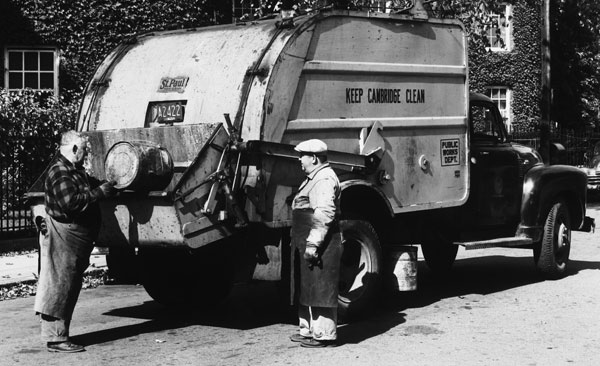
This is one of those Back to the Future things. As many of you know, Cambridge once had citywide food waste (garbage) collection where the old "honey wagon" would make the rounds collecting the buckets from back yards all around the city with the collected material destined for pig slop or other uses. The concrete-lined, steel-capped pits from those days can still be found in many Cambridge yards. The piggery days are long gone, but the wisdom of recycling organic waste for composting (and greenhouse gas reduction) remains. This is an undoubtedly good initiative to consider, though its economic viability remains unclear. A pilot program, if feasible, would be a welcome start. That said, many of us have been composting most of our kitchen and yard waste in our back yards for many years and will continue to do so.

Manager’s Agenda #10. Transmitting communication from Robert W. Healy, City Manager, relative to an order requesting the authorization to borrow an amount not to exceed $36,800,000 for the purpose of refinancing existing General Obligation Bonds to acquire lower interest rates than those currently being paid.

Louis DePasquale and the Finance Department are always on the job getting the best deals for taxpayers. It almost makes you want to forgive Louis for being a life-long avid Yankees fan.

On The Table #1 and #2 – The curb cuts at 37 Lancaster St. (#1) and at 9 Wyman St. (#2).

I imagine both of these curb cuts will be approved either at this meeting or pretty soon, but these applications (as well as our never-ending stream of zoning petitions) do serve to highlight the degree to which residential and commercial development proposals bring out the passions of abutters and others living near to these developments. It’s often not the curb cut itself that sets people off, but rather the belief that the developers are pulling a fast one and have not been entirely honest about their ultimate intentions. For example, in the case of the Wyman Street curb cut, there is a belief that ultimately this mammoth single-family structure that claims the need for entries on two different streets will one day become something entirely different. In truth, abutting residents and city councillors have very limited tools for influencing most projects, and zoning is often a very blunt instrument.

Unfinished Business #3 – The Election of a Mayor.

It’s possible that the City Council could resolve this before February, but if neither of the two 3-vote candidates (Cheung and Decker) or those who are supporting them relent, this could go on for many more weeks. Ultimately, if this drags on too long, those councillors who are committed to neither of these candidates could peel off a couple of votes from one or both of them to elect someone else. Several days ago I discovered a series of Harvard Crimson writings from The Great Mayoral Marathon of 1948 in which it took 4 months, 35 sessions, and 1,321 ballots before the City Council managed to assemble 5 votes to elect Mayor Michael J. Neville. The Crimson writers gave very entertaining accounts of the marathon. You can read them at http://cambridgecivic.com/?p=1796. If there is a mayoral vote at this meeting, the results will be posted at http://cambridgecivic.com/?p=1750.

Order #1. That the City Manager is requested to contact Sagewell, Inc. with the view in mind of providing a city-wide thermal analysis to Cambridge residents and report back to the Council within two weeks in time for an early winter 2012 thermal scan.   Councillor vanBeuzekom, Councillor Cheung and Councillor Davis

This is a welcome Order. When the Cambridge Energy Alliance was established a few years ago amid lots of fanfare, there was plenty of discussion about how to best advise and assist residential and commercial property owners in order to move toward the goal of a far more energy-efficient city. Perhaps the early excitement can be revived if more effort goes into showing where the improvements are most needed and just how much money there is to be saved.

Order #4. That the Acting Chair of the City Council is requested to appoint a temporary committee of three Council members to start the process of searching for and hiring a replacement City Clerk.   Councillor Kelley

Order #5. That the Acting Chair of the City Council is requested to appoint a temporary committee of three City Council members to start the process of setting up a City Council review of the City Manager and to start the discussion with the City Manager of his intentions.   Councillor Kelley

Order #6. That the City Clerk and Deputy City Clerk develop an interim plan for the City Council as it relates to the retirement of the City Clerk; such plan to include whatever reassignment of duties and responsibilities are required to carry out the operations of the City Clerk’s Office during this interim period.   Councillor Maher

These three Orders deserve comment as a group in that they concern two of the three people appointed by the City Council under the Plan E Charter, namely the City Clerk and the City Manager (the other being the City Auditor). Insofar as City Council subcommittees should be undertaking the responsibilities outlined in Councillor Kelley’s Orders #4 and #5, perhaps this is the best argument for why this City Council should elect an actual Mayor with the authority to appoint these committees. Normally, this would fall to the Government Operations & Rules Committee.

Regarding Order #5, the City Manager’s contract stipulates that "In the event written notice is not given, by either party to this agreement to the other six months prior to the termination date as hereinabove provided, this agreement shall extend on the terms and conditions as herein provided for a period of one year." Since the termination date of the current contract is September 30, 2012, this means that the City Council and the City Manager have until the end of March to make their intentions known. Since Councillor Kelley is the only councillor who voted against the Manager’s contract in 2009 (and voted Present on the previous 2006 contract), it seems somewhat aggressive that he should be the one proposing the procedures now.

Councillor Maher’s Order #6 is more constructive. City Clerk D. Margaret Drury has announced that her last day at work will be February 29 – just one month from now. The smooth operation of the City Clerk’s Office is vital for residents and for the City Council and, as Councillor Maher points out, Deputy City Clerk Donna Lopez has 42 years of experience working in the City Clerk’s Office. This Order would appoint Donna Lopez as Interim City Clerk of Cambridge, effective March 1, 2012. It is hard to imagine any councillor objecting to this Order, except possibly for the purpose of removing the term "Interim" from the title.

Order #7. That the City Manager is requested to confer with the Assistant City Manager of Community Development and report back with recommendation on zoning changes for the Sullivan Courthouse and neighboring parcels.   Councillor Toomey

As many have pointed out, if the former use of that building had not been as a courthouse, it is unlikely that it would have been built at its current height. Several city councillors have suggested that there be a reduction in the height if and when the building is redeveloped or replaced, and some of these ideas are included in the Order. One could argue that Councillor Toomey’s Order does not go far enough in specifying to CDD what zoning changes might be most appropriate. If, upon analysis, the CDD finds the specifications to be economically unsound, they presumably would recommend compromise zoning language.

Order #8. City Council support of Senate Bill S.772 which expresses the desire for the United States Congress to draft a Constitutional Amendment in response to the Citizens United decision.   Councillor Cheung and Councillor Decker

I’ve had numerous conversations recently about this court decision and all of the money that has flowed into political advertisement as a consequence of the decision. The campaign to amend the U.S. Constitution to reverse the effects of the decision seems to be based on the underlying belief that most voters are idiots. That is, when subjected to misleading mass media political advertising, they will simply accept as fact whatever rubbish is broadcast. They must therefore be prevented from such bad influence, and if it takes a constitutional amendment to do this, then so be it.

Maybe voters are not predominantly idiots. Perhaps, as these well-funded rubbish campaigns become more common, voters will develop the ability to tell the difference between fact and fiction, and the more millions that are spent, the more these advertisements will be seen as entertainment rather than information. Needless to say, many people are now getting their information, whether accurate or not, from a dizzying array of web sources most of which are not affected in any way by the Citizens United decision. Personally, I’m more concerned by threats to regulate speech on the web than I am by the ability of corporations to advertise political rubbish.

Communications and Reports #1. A communication was received from Councillor Craig A. Kelley, regarding the subject of the late resolutions not being read.

In principle, I have to agree with Councillor Kelley on this one. The full text of ceremonial resolutions is not now publicly available but, for goodness sake, if you are going to pass a death resolution when somebody dies, you should at least have the courtesy to read the person’s name. Personally, though I don’t see the need to print the full text of ceremonial resolutions, it should be publicly available on the City web site. – Robert Winters

January 27, 2012

Harvard Crimson Archive – The Great Cambridge Mayoral Marathon of 1948

Filed under: Cambridge,Cambridge government,City Council — Tags: , , , — Robert Winters @ 2:24 pm

The Harvard Crimson has a searchable archive that can’t be beat. With the current comedy of the unresolved Cambridge mayoral election, I thought it might be worth looking at some of the accounts of the Marathon of 1948 when it took four months, 35 sessions, and 1,321 ballots before finally electing Michael J. Neville as Mayor. There are a few archiving errors here and there, some of which I’ve edited, but you’ll get the picture. Links to all of the Crimson articles are provided. – Robert Winters


Smash Hit
Published: Friday, January 16, 1948
http://www.thecrimson.com/article/1948/1/16/smash-hit-pa-few-blocks-down/

A few blocks down Massachusetts Avenue one of the best farces to be produced in many years is showing nightly before a packed house. Opening night at the show was not the sensation that one might expect, for at the time there was no indication that the play would have such a run. It has already put ten performances behind it and threatens to continue indefinitely.

There is no real lead in the play. Top roles are shared by nine men, all of whom happen to be members of the Cambridge City Council. Their acting is well nigh flawless. The plot is centered around the futile and ludicrous efforts of a City Council to elect a mayor from among the members of the Council. To date they have held 319 ballots, and no one has been chosen, though at a point early in the balloting one of the actors had four votes and needed only his own to make him mayor of the city. Fortunately he was too modest to vote for himself. That would have spoiled the whole performance.

There have been some charges that the entire plot was lifted from one of the early Mack Sennett comedies. The good boys (stamped by the CCA) are battling the bad boys (Micky Sullivan’s cohorts). But the good boys can’t agree upon a plan of action, so they are thwarted at every turn. Eventually, just when it seems sure that the bad boys have won the day, they will be confused by some daring stratagem, and virtue will reign triumphant–maybe.

The final touch of irony is added by the fact that even if someone does eventually get elected mayor, it will be a hollow victory. For Cambridge has a City Manager type of government, commonly known in Massachusetts as Plan E. The Manager is the person who really runs the city; the mayor glories in his title and draws down an extra thousand shekels a year.

Promoters in other cities have been watching the production with great interest. Perhaps they plan to institute similar productions all over the country. And well they might. An election marathon has infinitely greater possibilities than six day bicycle racing. It is a much funnier and far less tiring form of indoor sport.


Divide and Flounder
Published: Monday, February 16, 1948
http://www.thecrimson.com/article/1948/2/16/divide-and-flounder-pon-january-5th/

On January 5th, nine ambitious men gathered at City Hall to elect a Mayor of Cambridge. Today, seven weeks and 841 futile ballots later, the City Council is still unable to decide which one among them shall serve as the chief executive. The filibuster has seen the Council Chamber criss-crossed by vicious political tracers, it has turned simple ambition into bitter perversity, and has delayed vital legislation. Resulting from a hopelessly disorganized political system and a calculated smear campaign by a few professional politicians, the lengthy stalemate can only give the Councilmen enough rope to hang themselves and possibly the city along with them.

The fact that a deadlock has been allowed to drag on for seven dreary weeks is an eloquent commentary on the current state of Cambridge politics. Although elections are fought on a broad reform and anti-reform basis, there is a complete absence of party discipline among members of the same faction. Each man views his legislative duties in the light of his personal ambitions and thus obviates any hope for concerted action. The returns from the November election gave the backers of Managerial government and proportional representation a clear cut majority of five men on the City Council. It should have been a simple matter to elect a Mayor by a majority vote. The reformists, all backed by the Cambridge Civic Association, promptly developed a schism and gummed the work. Former Mayor John D. Lynch claims a supernatural mandate from the people. His dearest friend, Hyman Pill, has cast 841 votes for the man with a mandate. Messrs. Deguglielmo, Crane, and Swan, also of the CCA, dislike and distrust Lynch and have split their three votes among themselves. These men are the backers of Plan E. They are responsible for its continuing success in a city that still wants to be shown. If, through personal ambition and mutual dislike, they discredit that most excellent plan, one can only guess to what depths their I.Q. has plummeted.

What was originally a worthless minority of four anti-Plan E votes on the City Council now looms as the strongest group. The unexpected fratricide among reformists has proved a strategic godsend to the men intent on discrediting Plan E and proportional representation in the eyes of the electorate. PR forces a candidate before the entire city for re-election instead of allowing him the relative security of a small well-organized Ward. Such a plan constitutes a direct menace to professional politicos like Sullivan, Foley, Sennott, and Neville. Their political futures demand an inoperative government and a continuing stalemate. Although these men have had it within their power to elect one of themselves Mayor several times they have always split their vote. At one point Neville, having three anti-reform votes, received an unexpected CCA ballot. Mickey (the dude) Sullivan was last to vote and cast a ballot for John D, Lynch, one of his bitter political enemies. There was no Mayor elected that day. As long as the opposing factions in the reform camp insist on feuding, these men will be able to extend the filibuster indefinitely.

All improvements, budgets, and vacancies come under the jurisdiction of a School Committee headed by the Mayor. If there is no Mayor, the committee cannot function and any successful operation of the schools becomes impossible. Cambridge’s educational program, recently the target of a lengthy report by Professor Simpson, is badly antiquated and desperately in need of overhauling. Any such revision of the school program can come only from the School Committee and for this reason alone the election of a Mayor is a matter that should be placed outside the realm of petty politics. Along with the general loss of prestige for Plan E, a more specific evil of this senseless stalemate is its crippling effect on the city’s school system.


Mickey’s Minstrels Carry On To Snap Long-Run Records
Published: Tuesday, February 17, 1948
http://www.thecrimson.com/article/1948/2/17/mickeys-minstrels-carry-on-to-snap/

Cambridge’s legislative carnival is now rocketing into its seventh fun-packed week and still no Mayor. With 841 sterile ballots to their credit since January 5th, the nine-man City Council is eagerly looking forward to the thousand mark, at which time, it is reported, each member will receive a complimentary copy of "Laughing Gas" by Dr. O. H. Schneiderman, anesthetist at Bregman Memorial Hospital.

Early rumors that a conscience-stricken Councilman would attempt to break the filibuster were squelched by an ugly counter-rumor that he wouldn’t.


1,220 Ballots, Yet Mayor’s Job Open
Published: Saturday, March 13, 1948
http://www.thecrimson.com/article/1948/3/13/1220-ballots-yet-mayors-job-open/

Ballot number 1,220 was cast last night in another futile attempt to elect a mayor for Cambridge.

Filing into the meeting 45 minutes late, the city’s nine uncompromising council-members didn’t once give the impression that they might accomplish anything. Even the clock on the council chamber wall was slow.

A crowd of 75 soda-drinking and candy-munching spectators heard Hyman Pill vote for himself 15 times, thereby preventing any majority vote.

To the observer, it was like one big poker game, with members of three determined cliques bluffing each other to see how long each would last out the game. Clouds of smoke thickened in the room, but the plot still looked clear. Cambridge would stay without a mayor.


Appointed Mayor May Halt City’s Election Comedy
Published: Saturday, April 24, 1948
http://www.thecrimson.com/article/1948/4/24/appointed-mayor-may-halt-citys-election/

Governor Bradford may soon confiscate the script of Cambridge’s most popular comedians.

He threatens to name City Clerk Frederick H. Burke to the long-disputed mayor’s post, and thereby put an end to the fruitless voting sessions that one gallery observer called "the most ludicrous burlesque I ever saw."

Although 1803 ballots have been cast since January 5, no mayor has been selected in the 34 voting sessions. Interspersed between each ballot, the council-men have slipped eggs in each other’s pockets, joked loudly, and even refused to swing the tide by voting for themselves. Hundreds of Cambridge citizens have come to the sessions, and have laughed, jeered, and insulted the actors on the councilroom stage. "Ridiculous," they ruefully admit between sips of lemonade.

No Signs in Cambridge
Not one new sign has been hung in Cambridge this year as one result of the lack of a mayor, for his signature is needed on every permit for a new bill-board or shingle. "No mayor, no sign," exasperated storekeepers explain.

But despite the apparent necessity of a mayor, local citizens won’t be entirely happy even when this long-awaited figurehead finally gets in the City Hall. If Governor Bradford appoints the city clerk to the post, and lets the Council play around with its fruitless elections on its own time, Cambridge will loose its most recently discovered amusement center–the council chamber on the second floor of City Hall.

Any such action from Beacon Hill would set a political precedent, but what is even more important, it would at last give Cambridge a man down at City Hall with enough power and prestige to issue okays for the newly painted shingles that must now stay inside its stores.


Mayor’s Nest
Published: Thursday, April 29, 1948
http://www.thecrimson.com/article/1948/4/29/mayors-nest-pafter-1312-ballots-and/

After 1,321 ballots and countless pocketed raw eggs, the Cambridge City Council has reached the end of the road. It was a long road and often a comic one, but last Friday the councilmen met for the thirty-sixth time and decided not to vote again. They didn’t have to, for they had finally elected a mayor.

How the group arrived at this unprecedented decision is still unclear. Since January 5, each councilman found his own desires stronger than the theoretical interest of the group; though there was no crucial issue keeping the factions apart, no candidate garnered a majority. A major attempt to force a compromise and end the haggling failed in February, but virtually the same plan succeeded last Friday when five votes seated Michael Neville. Regardless of whether the elusive majority materialized with the Spring, or whether it stemmed from Governor Bradford’s edict to produce or else, the shouting is over and the Mayor’s chair is filled.

Filling the vacancy won’t exactly clear up confusion for there was little confusion to begin with. The Cambridge City Manager attended to all routine chores during the interregnum–only the School Committee was held inactive. Now that Mr. Neville is elected, the School Committee can roam at will, and signs can once more be posted bearing the mayor’s signature. Only one questions remains: do these advantages really compensate for the loss of the famed Councilmen capers? Mayors are good to have, but vaudeville is priceless.

January 23, 2012

Will there be a Mayor? – Jan 23, 2012 Cambridge City Council Agenda

Filed under: City Council — Tags: , , — Robert Winters @ 1:51 am

Will there be a Mayor? – Jan 23, 2012 Cambridge City Council Agenda

In addition to the regular items on the meeting agenda, there’s still the lingering question of whether this City Council plans to elect a mayor this term. The results of the first two ballots may or may not be meaningful – it all depends upon whether the two who amassed 3 votes each last time (Cheung, Decker) can ever make it to 5 votes. If not, eventually the votes will find their way to a candidate who has majority acceptability, and that may not be either of the two current frontrunners. The relevant agenda item is Unfinished Business #3. The votes taken will continue to be recorded here: http://cambridgecivic.com/?p=1750. Feel free to comment.

Fundamentally, this matters more to the councillors than it does to the residents of the city. It really only determines who gets to appoint the committees, chair the meetings, get a paycheck bonus, and have the privilege of planning a few senior picnics. The one exception is that the mayor becomes the 7th voting member and Chair of the School Committee, and this is potentially consequential in that they are right now making decisions about the new upper school structure (Innovation Agenda). It would be nice if the person elected as Mayor actually believes in and is willing to act in support of academic excellence. [Ref.: Cambridge Public Schools Academic Challenge Plan]

There’s one other potential consequence of this mayoral election. If the choice of mayor causes many Cambridge residents to shake their heads in disbelief, this could lead some to seek a change in the Charter to have a popularly elected mayor (which would continue to be more ceremonial than substantial) or perhaps even more fundamental Charter change (along with the inevitable unintended consequences). On the other hand, civic interest is currently so dreadfully low that it’s hard to imagine any person or group having enough interest to carry out such a campaign. In any case, it would be a mistake to blame the system for the failings of the people we elect.

It’s interesting that Resolution #22 (sponsored by 8 councillors) offers congratulations to Councillor Henrietta Davis on being named Chair of the National League of Cities International Council. Meanwhile, back in Cambridge, none of these 8 councillors seem willing to vote for Davis as mayor.

There are several energy/environment Orders on this agenda:

Order #3. That the City Manager is requested to devise and implement a system for annually reporting the energy use of each municipal building, including schools and buildings leased by the city, and to communicate this information to the public by making it available on the city website and through other means such as displays in building lobbies and city publications.   Councillor Davis and Councillor vanBeuzekom

Order #9. That the City Manager is requested to designate a committee to include the City’s Assistant City Manager for Fiscal Affairs, to analyze various scenarios for installation of renewable energy facilities for city buildings.   Councillor Davis

Order #10. That the City Manager is requested to revisit instituting a ban on plastic bags from retail institutions.   Councillor Decker and Councillor vanBeuzekom

Order #11. That this City Council go on record requesting that Cambridge go "coal-free" in an effort to combat the negative effects such energy has on health, economics and social justice.   Councillor Decker and Councillor vanBeuzekom

Councillor vanBeuzekom is wasting no time promoting some of the things that really matter to her, and the combination of her and Councillor Davis should keep these issues in the forefront for the next two years. In Order #10, most of the emphasis is on pollution, but there is an even more basic reason for dissuading people from using plastic bags. They inevitably make their way into the single-stream recycling containers (even though it’s against the rules) and they foul up the machinery at the Charlestown processing plant. However, banning Cambridge retailers from using plastic bags is not a particularly great strategy when so many of us do our shopping in Somerville and elsewhere. Rules governing product packaging and recycling have to be regional or statewide to be effective.

Order #7. That the City Manager is requested to report back to the City Council on how the City of Cambridge promotes and enforces the Cambridge Employment Plan.   Councillor Toomey

It’s worth reading this plan that dates primarily to 1984 and 1990. Councillor Toomey’s focus seems to be on hiring Cambridge residents for construction projects. It’s interesting that a proposed ordinance change in 2008 in response to threatened litigation would have relaxed portions of the Ordinance relating to the hiring of Cambridge residents, but the matter was placed on file without action.

Order #12. That this City Council go on record strongly suggesting that Equity World only work with companies that do meet community standards and to provide further information regarding why they chose to work with a company that does not.   Councillor Decker

Yet another Order filed on behalf of the labor unions. The Order states that a certain contractor has been "accused of fraud, asbestos violations, debarments, apprenticeship issues and DOL issues." It’s interesting that a Council Order should be based on accusations without any reference to whether this contractor has ever been found guilty of any of these accusations.

Order #13. That the City Manager is requested to report back to the Council on how appropriate information pertaining to parking sticker location (how many parking stickers are issued to a street or address) may be made readily available, free of charge and on the City’s website, to the general public or, if that is not possible, what information may be made available and why any limitations on dissemination of such information exists.   Councillor Kelley

Nobody likes competing for on-street parking spaces, but do we really want to categorize buildings and the neighbors who live in them by how many resident stickers are issued for each building?

Order #14. That the City Manager is requested to develop a complete list of all agreements which give continuing benefit to the residents of Cambridge and the mechanism for keeping track of expiration, enforcement or change of ownership.   Councillor vanBeuzekom

This is the kind of thing you might think is already routinely done, but it’s doubtful that it is. It might be a good idea to merge this information with the identification scheme proposed in Order #15 of Aug 1, 2011 (comments here).

Comments?

January 8, 2012

A Clean Slate – Jan 9, 2012 Cambridge City Council Agenda

Filed under: Cambridge,City Council — Tags: , , — Robert Winters @ 11:09 pm

A Clean Slate – Jan 9, 2012 Cambridge City Council Agenda

This is the first regular meeting of the 2012-13 City Council term and, except for a few matters of Unfinished Business, it’s a clean slate. Because the new City Council was unable to elect a mayor at its Inaugural Meeting last week, it is expected that one or more mayoral ballots may occur at this meeting. It’s anyone’s guess whether they will succeed in electing a mayor this time, but there will be no City Council committees appointed until there is a mayor. The relevant agenda item is Unfinished Business #1. In the event that this is decided later in the meeting, I invite my diligent civic friends to report the play-by-play as a comment at http://cambridgecivic.com/?p=1750 at the earliest opportunity.

Resolution #21. Retirement of Robert M. Stevens as Director of Veterans Services for the City of Cambridge.   Councillor Kelley

Bob Stevens is a good man whose company has been enjoyed by all who have worked with him and by many others (including me). Enjoy your retirement!

Order #2. That the City Manager is requested to present a plan to offer recycling receptacles in the public realm such as in parks and city squares.   Councillor Davis and Councillor vanBeuzekom

There are now many solar-powered "Big Belly" trash containers in Central Square and elsewhere. Ideally, some of these might be repurposed for single-stream recycling, but the signage would have to be unmistakably clear indicating that only recyclable materials are to be deposited in the containers. This Order references dual purpose solar-powered containers in use in Somerville, but such an additional purchase would likely be a nontrivial additional cost.

Order #5. That the City Manager is requested to work with the appropriate departments and report back to the City Council with an opinion on whether the widespread use of rodent resistant trash bags would improve the City’s pest management efforts.   Councillor Cheung

The theory is that some scent or chemical is added to the plastic to deter the rodents. Cambridge rodents are, of course, more intelligent than ordinary rodents and will surely research the matter and gnaw their way toward a solution.

Order #6. That the City Clerk, who is the Parliamentarian of the City Council, is requested to organize a review of Robert Rules of Order beginning with the current Council and every new Council hereafter, with a view towards ensuring transparent, orderly and productive deliberations of the City Council.   Councillor Simmons, Councillor Cheung and Councillor vanBeuzekom

This has been a sore spot for several city councillors – most notably Councillor Simmons and Councillor Kelley. Proper procedure during the regular meetings would be welcome, but it would be even more helpful if the City Council committees could be restored to productive use. With a few exceptions, Council committees have largely become places where the Chair of the committee carries out a pet project or two – hardly a collaborative process. Committee attendance has declined accordingly, and the last City Council had a number of significant resignations from committees. Some committees met rarely, and one committee did not meet at all during the entire Council term. There has also been a proliferation of single-councillor ad-hoc committees (Red, Blue, and Silver Ribbon Committees) that are not subject to any of the rules applicable to regular City Council committees.

Order #7. That the City Manager is requested to prepare a home rule petition to delegate the approval of curb cuts and report back to the Council with the necessary legislative language.   Councillor Cheung

This was an early issue from Councillor Decker a decade ago. Delegating the approval of curb cuts seems like a good idea in most instances, but there have been a few significant cases in which the City Council’s authority in this matter has played a role in negotiating a better outcome for neighbors.

Communications & Reports from City Officers #1. A communication was received from D. Margaret Drury, City Clerk, transmitting a letter from former Mayor and City Councillor David P. Maher, regarding executive session minutes of City Council discussions of the Monteiro case.

Former Mayor Maher has determined that there is no longer a need for these minutes to remain confidential. They go now to the Law Department for review and possible exemptions before public disclosure. Perhaps there will be an interesting twist revealed with this disclosure, but this dead horse has now been beaten beyond recognition. – Robert Winters

December 25, 2011

How would you elect a mayor?

Filed under: 2011 Election,Cambridge government,City Council,elections — Tags: , , , — Robert Winters @ 3:04 pm

Instant Runoff Simulations for Choosing the Cambridge Mayor

In Cambridge, the Mayor is the Chair of the City Council and of the School Committee. This is not a popularly elected mayor, but over the years some have suggested that it should be. Often missing from the conversation is the question of how such a popular election would take place in the context of a Plan E Charter, proportional representation elections for City Council and School Committee, and a city manager form of government.

One suggestion that has been made is that without changing the Charter, the City Council could factor into their decision what the actual City Council ballots might have to say regarding the "popular choice" for who should be chosen as mayor. This is only a simulation and must be understood with the caveat that voters might vote differently if they knew that their City Council vote might also be used to elect the mayor. That said, here’s what the ballots have to say for the 1997 through 2011 City Council elections and what actually happened in the City Council vote for mayor for each of these mayoral elections.

1997 Election Round 1 Round 2 Round 3 Round 4 Round 5 Round 6 Round 7 Round 8 Round 9
Galluccio, Anthony D. 2738 2793 3299 3582 4136 4347 4701 6671 0 DEFEATED — 8th round
Duehay, Francis 2118 2440 2548 2739 2851 3827 6037 6759 6759 ELECTED — 8th round
Triantafillou, Katherine 2022 2241 2331 2679 2780 3596 0 0 0 DEFEATED — 6th round
Sullivan, Michael A. 1833 1862 2359 2676 3593 3733 3984 0 0 DEFEATED — 7th round
Toomey, Timothy J., Jr. 1816 1835 2005 2156 0 0 0 0 0 DEFEATED — 4th round
Born, Kathleen 1712 1947 2024 2236 2342 0 0 0 0 DEFEATED — 5th round
Reeves, Kenneth E. 1674 1771 1859 0 0 0 0 0 0 DEFEATED — 3rd round
Russell, Sheila 1618 1664 0 0 0 0 0 0 0 DEFEATED — 2nd round
Davis, Henrietta 1084 0 0 0 0 0 0 0 0 DEFEATED — 1st round
EXHAUST 0 62 190 547 913 1112 1893 3185 9856
Total 16615 16615 16615 16615 16615 16615 16615 16615 16615

Actual result: On January 26, 1998 on the 3rd Ballot, Francis Duehay was elected as mayor for the 1998-1999 City Council term.
Note: The three most popular Instant Runoff candidates were Francis Duehay, Anthony Galluccio, and Michael Sullivan. The most popular candidate was elected as mayor.


1999 Election Round 1 Round 2 Round 3 Round 4 Round 5 Round 6 Round 7 Round 8 Round 9
Galluccio, Anthony D. 3540 4072 4192 4641 4996 5171 6685 7195 8857 ELECTED — 9th round
Decker, Marjorie C. 2193 2262 2570 2655 3054 3765 4072 0 0 DEFEATED — 7th round
Born, Kathleen 2187 2249 2970 3072 3395 4343 4812 6810 0 DEFEATED — 8th round
Braude, Jim 1976 2021 2301 2355 2545 0 0 0 0 DEFEATED — 5th round
Reeves, Kenneth E. 1825 1868 2022 2139 0 0 0 0 0 DEFEATED — 4th round
Davis, Henrietta 1796 1832 0 0 0 0 0 0 0 DEFEATED — 2nd round
Toomey, Timothy J., Jr. 1776 1889 1923 0 0 0 0 0 0 DEFEATED — 3rd round
Sullivan, Michael A. 1610 1934 1999 2764 3147 3295 0 0 0 DEFEATED — 6th round
Maher, David 1343 0 0 0 0 0 0 0 0 DEFEATED — 1st round
EXHAUST 0 119 269 620 1109 1672 2677 4241 9389
TOTAL 18246 18246 18246 18246 18246 18246 18246 18246 18246

Actual result: In the wee hours of February 15, 2000 on the 5th Ballot, Anthony Galluccio was elected as mayor for the 2000-2001 City Council term.
Note: The three most popular Instant Runoff candidates were Anthony Galluccio, Kathleen Born, and Marjorie Decker. The most popular candidate was elected as mayor.


2001 Election Round 1 Round 2 Round 3 Round 4 Round 5 Round 6 Round 7 Round 8 Round 9
Galluccio, Anthony D. 3477 3851 4042 4478 4836 6241 6654 7415 8402 ELECTED — 9th round
Davis, Henrietta 2174 2229 2346 2435 3005 3271 4380 6232 0 DEFEATED — 8th round
Murphy, Brian 2172 2241 2303 2331 2713 2838 0 0 0 DEFEATED — 6th round
Decker, Marjorie C. 1845 1914 2067 2173 0 0 0 0 0 DEFEATED — 4th round
Simmons, Denise 1762 1814 2296 2369 2836 2995 3812 0 0 DEFEATED — 7th round
Toomey, Timothy J., Jr. 1485 1578 1640 0 0 0 0 0 0 DEFEATED — 3rd round
Sullivan, Michael A. 1420 1703 1828 2459 2611 0 0 0 0 DEFEATED — 5th round
Reeves, Kenneth E. 1300 1345 0 0 0 0 0 0 0 DEFEATED — 2nd round
Maher, David P. 1167 0 0 0 0 0 0 0 0 DEFEATED — 1st round
EXHAUST 0 127 280 557 801 1457 1956 3155 8400
TOTAL 16802 16802 16802 16802 16802 16802 16802 16802 16802

Actual result: On January 7, 2002 on the 1st Ballot, Michael Sullivan was elected as mayor for the 2002-2003 City Council term.
Note: The three most popular Instant Runoff candidates were Anthony Galluccio, Henrietta Davis, and Denise Simmons. The 5th most popular candidate was elected as mayor.


2003 Election Round 1 Round 2 Round 3 Round 4 Round 5 Round 6 Round 7 Round 8 Round 9
Galluccio, Anthony D. 3500 3937 4023 4570 5024 5331 5951 8008 9528 ELECTED — 9th round
Davis, Henrietta 2786 2859 3204 3326 3712 4795 6137 6852 0 DEFEATED — 8th round
Murphy, Brian 2114 2318 2488 2544 2716 0 0 0 0 DEFEATED — 5th round
Decker, Marjorie C. 1961 2033 2398 2495 2931 3475 0 0 0 DEFEATED — 6th round
Sullivan, Michael A. 1913 2218 2320 3015 3396 3703 4039 0 0 DEFEATED — 7th round
Reeves, Kenneth E. 1828 1897 2269 2371 0 0 0 0 0 DEFEATED — 4th round
Toomey, Timothy J., Jr. 1817 1929 1986 0 0 0 0 0 0 DEFEATED — 3rd round
Simmons, Denise 1683 1729 0 0 0 0 0 0 0 DEFEATED — 2nd round
Maher, David P. 1452 0 0 0 0 0 0 0 0 DEFEATED — 1st round
EXHAUST 0 134 366 733 1275 1750 2927 4194 9526
TOTAL 19054 19054 19054 19054 19054 19054 19054 19054 19054

Actual result: On January 5, 2004 on the 1st Ballot, Michael Sullivan was elected as mayor for the 2004-2005 City Council term.
Note: The three most popular Instant Runoff candidates were Anthony Galluccio, Henrietta Davis, and Michael Sullivan. The 3rd most popular candidate was elected as mayor.


2005 Election Round 1 Round 2 Round 3 Round 4 Round 5 Round 6 Round 7 Round 8 Round 9
Galluccio, Anthony D. 2437 2598 2994 3136 3383 3800 5171 5942 0 DEFEATED — 8th round
Decker, Marjorie C. 1823 1962 2054 2381 2689 0 0 0 0 DEFEATED — 5th round
Davis, Henrietta 1804 1911 1978 2461 2936 3821 4229 6006 7864 ELECTED — 9th round
Sullivan, Michael A. 1777 1929 2532 2689 2865 3113 0 0 0 DEFEATED — 6th round
Kelley, Craig A. 1665 1696 1724 1869 0 0 0 0 0 DEFEATED — 4th round
Simmons, Denise 1621 2174 2262 2517 2794 3460 3853 0 0 DEFEATED — 7th round
Murphy, Brian 1590 1662 1700 0 0 0 0 0 0 DEFEATED — 3rd round
Toomey, Timothy J., Jr. 1577 1629 0 0 0 0 0 0 0 DEFEATED — 2nd round
Reeves, Kenneth E. 1433 0 0 0 0 0 0 0 0 DEFEATED — 1st round
EXHAUST 0 166 483 674 1060 1533 2474 3779 7863
TOTAL 15727 15727 15727 15727 15727 15727 15727 15727 15727

Actual result: On January 2, 2006 on the 1st Ballot, Kenneth E. Reeves was elected as mayor for the 2006-2007 City Council term.
Note: The three most popular Instant Runoff candidates were Henrietta Davis, Anthony Galluccio, and Denise Simmons. The least popular candidate was elected as mayor.


2007 Election Round 1 Round 2 Round 3 Round 4 Round 5 Round 6 Round 7 Round 8 Round 9
Toomey, Timothy J., Jr. 1829 1919 2010 2145 2244 3018 3561 3939 0 DEFEATED — 8th round
Davis, Henrietta 1811 2062 2313 2818 3435 3795 4443 5903 6645 ELECTED — 9th round
Maher, David P. 1672 1720 1886 2020 2200 0 0 0 0 DEFEATED — 5th round
Reeves, Kenneth E. 1480 1764 1838 2048 2249 2452 0 0 0 DEFEATED — 6th round
Murphy, Brian 1343 1430 1633 1853 0 0 0 0 0 DEFEATED — 4th round
Seidel, Sam 1314 1410 1687 1879 2283 2510 2814 0 0 DEFEATED — 7th round
Kelley, Craig A. 1308 1380 0 0 0 0 0 0 0 DEFEATED — 2nd round
Decker, Marjorie C. 1276 1468 1609 0 0 0 0 0 0 DEFEATED — 3rd round
Simmons, E. Denise 1256 0 0 0 0 0 0 0 0 DEFEATED — 1st round
EXHAUST 0 136 313 526 878 1514 2471 3447 6644
TOTAL 13289 13289 13289 13289 13289 13289 13289 13289 13289

Actual result: On January 14, 2008 on the 2nd Ballot, Denise Simmons was elected as mayor for the 2008-2009 City Council term.
Note: The three most popular Instant Runoff candidates were Henrietta Davis, Tim Toomey, and Sam Seidel. The least popular candidate was elected as mayor.


2009 Election Round 1 Round 2 Round 3 Round 4 Round 5 Round 6 Round 7 Round 8 Round 9
Davis, Henrietta 2343 2601 3010 3431 3677 4049 4846 5589 7678 ELECTED — 9th round
Toomey, Jr., Timothy J. 2199 2284 2355 2478 2645 3330 3648 0 0 DEFEATED — 7th round
Simmons, E. Denise 2191 2318 2563 2912 3698 3949 4460 5158 0 DEFEATED — 8th round
Maher, David P. 1667 1749 1873 2017 2121 0 0 0 0 DEFEATED — 5th round
Kelley, Craig A. 1623 1759 1952 2083 2154 2384 0 0 0 DEFEATED — 6th round
Reeves, Kenneth E. 1450 1501 1580 1760 0 0 0 0 0 DEFEATED — 4th round
Decker, Marjorie C. 1438 1476 1531 0 0 0 0 0 0 DEFEATED — 3rd round
Seidel, Sam 1238 1373 0 0 0 0 0 0 0 DEFEATED — 2nd round
Cheung, Leland 1205 0 0 0 0 0 0 0 0 DEFEATED — 1st round
EXHAUST 0 293 490 673 1059 1642 2400 4607 7676
TOTAL 15354 15354 15354 15354 15354 15354 15354 15354 15354

Actual result: On February 22, 2010 on the 6th Ballot, David Maher was elected as mayor for the 2010-2011 City Council term.
Note: The three most popular Instant Runoff candidates were Henrietta Davis, Denise Simmons, and Tim Toomey. The 5th most popular candidate was elected as mayor.


2011 Election Round 1 Round 2 Round 3 Round 4 Round 5 Round 6 Round 7 Round 8 Round 9
Cheung, Leland 2591 2719 3119 3437 4151 4594 5632 6827 7695 ELECTED — 9th round
Maher, David P. 1951 2035 2193 2382 2480 3081 3554 0 0 DEFEATED — 7th round
Toomey, Jr., Timothy J. 1924 2023 2094 2193 2275 0 0 0 0 DEFEATED — 5th round
Davis, Henrietta 1839 1914 2104 2461 2800 2984 0 0 0 DEFEATED — 6th round
Simmons, E. Denise 1597 2095 2200 2513 2702 3001 3812 4586 0 DEFEATED — 8th round
vanBeuzekom, Minka Y. 1459 1492 1728 1825 0 0 0 0 0 DEFEATED — 4th round
Kelley, Craig A. 1416 1451 0 0 0 0 0 0 0 DEFEATED — 2nd round
Decker, Marjorie C. 1356 1469 1588 0 0 0 0 0 0 DEFEATED — 3rd round
Reeves, Kenneth E. 1255 0 0 0 0 0 0 0 0 DEFEATED — 1st round
EXHAUST 0 190 362 577 980 1728 2390 3975 7693
TOTAL 15388 15388 15388 15388 15388 15388 15388 15388 15388

Actual result: Inauguration Day is Monday, January 2, 2012. The 1st Ballot for mayor will be cast at the Inaugural Meeting.
Note: The three most popular Instant Runoff candidates were Leland Cheung, Denise Simmons, and David Maher.

Feb 22, 2012 Update: Henrietta Davis was elected on the 10th Ballot as mayor for the 2012-2013 City Council term. The 4th most popular candidate was elected as mayor.

December 19, 2011

Last Call at City Hall – Dec 19, 2011 Cambridge City Council Agenda

Filed under: City Council — Tags: , — Robert Winters @ 10:18 am

Last Call at City Hall – Dec 19, 2011 Cambridge City Council Agenda

This is the last meeting of the 2010-11 City Council term. Several active matters will carry over to the new City Council, but everything else goes away to allow for a fresh start. This will also be the last meeting for Councillor Seidel who will, presumably, receive the usual parting gifts (monogrammed gavel? rocking chair with a City of Cambridge official seal?). The agenda is short, but there are a few significant items. Note also that the regular 5:30pm meeting will be preceded by a special 4:00pm Roundtable meeting with the School Committee "to discuss various aspects of the Innovation Agenda, including capital needs."

Reconsideration #1. Councillor Kelley notified the City Clerk of his intention to move reconsideration on the vote taken on Dec 12, 2011 to ordain as amended the re-filed petition to amend the zoning ordinance filed by Chestnut Hill Realty. The petition would allow creation by special permit of rental apartment units in basement units of existing multifamily residential buildings in Residence C Districts which meet the special permit criteria. The question comes on passing to be ordained on or after Nov 28, 2011. Planning Board hearing held 9/6/11. Petition expires Dec 13, 2011.

This will be just a formality after which ordination will be finalized. The most problematic aspect of this zoning petition is not whether it’s OK to create a few basement apartments. As the substitute language passed last week indicates, it’s probably OK as long as certain conditions are met, though it does put the City Engineer in the unusual position of determining when a development project may go forward. The real issue is the way campaign contributions grease the wheels of legislation. It is absurd to characterize this zoning amendment as some sort of act of charity, and it’s even more absurd to characterize the campaign contributions as "supporting local government".

This is all about money – how to make more of it and how to use it to buy legislation – and it’s not just about Chestnut Hill Realty. Increasing profit is neither illegal nor immoral, and we do live in a capitalist economy, but when the money channeled from a single developer into the campaign accounts of some elected officials is of the same order of magnitude as the entire campaign budget of other elected officials, it is only natural that questions will be raised – even moreso when those who vote in favor of the zoning change exactly match those who received money from the petitioner.

City Manager’s Agenda #2. Transmitting communication from Robert W. Healy, City Manager, relative to Awaiting Report Item Number 11-156, regarding outside legal expenses incurred by the City for the Monteiro case and related cases.

The costs are laid out in the following communication from City Solicitor Don Drisdell. It is expected that the City Council will discuss the other settlement amounts in Executive Session.


December 19, 2011
Robert W. Healy,
City Manager
City Hall,
Cambridge, MA 02139

Re: Awaiting Report No. 11-156 re: Report Back on Council Order No. 6, dated 10/24/2011

Dear Mr. Healy:

In response to the above referenced Council Order, please be advised of our responses as follows to the Council’s specific requests:

1. The outside legal expenses incurred by the City for the Monteiro case and related cases and issues.

Total: $2,633,194.67 to date. This total includes:

(a) $611,563.63 – for discovery and other pre-trial matters from 1999 to 2003 for all five of the original cases (Hampton, LaChance, Stamper, Wong and Monteiro), including summary judgment motions, fairly split among the five cases. The summary judgment motion resulted in judgment for the City in two of the five cases, and judgment for the City on the most substantive allegations of a third case.

(b) $674,446.30 – Monteiro pre-trial and trial expenses related to the first jury trial (2005) and post-trial matters. The jury found in favor of the City by determining that there had been no discrimination against Ms. Monteiro prior to her filing of a complaint with the MCAD. The jury was hung on the allegations of retaliation after the filing of the MCAD complaint, which necessitated a second trial.

(c) $858,776.21 – expenses related to the second Monteiro jury trial (2008) and post-trial matters. Following the conclusion of the second trial through the date of entry of the final judgment, which spanned almost two years, much of the time expended was overwhelmingly related to post-trial motions and other matters pertaining to the trial court action.

(d) $488,409.53-expenses for the appeal.

2. The cost of the appeal of the Monteiro case over the original judgment, to include interest and legal fees for both the defendant and the plaintiff.

(a) $913,673.90 – interest on damages awards after the entry of final judgment.

(b) $298,349.33 – plaintiff’s attorneys fees and costs award for the appeal.

3. The amount of money related cases were settled for.

This will be discussed with the City Council in Executive Session.

4. The overall amount of money paid to Ms. Monteiro.

The City has paid Ms. Monteiro and her law firm a total of $8,067,461.78, which includes all damage awards, interest, costs and legal fees. The amount that Ms. Monteiro received and the amount that her law firm received from that total is not known to the City.

Very truly yours, Donald A. Drisdell


That’s it for this Council term. We’ll be welcoming City Councillor Minka vanBeuzekom with the new year. Hopefully the new Council will see fit to elect a mayor on the first ballot on January 2 and that they will make a good choice. – Robert Winters

Comments?

December 12, 2011

Now Featured on the Dec 12, 2011 Cambridge City Council Agenda

Filed under: campaign finance,City Council — Tags: , , , — Robert Winters @ 12:02 pm

Now Featured on the Dec 12, 2011 Cambridge City Council Agenda

The agenda is short but potentially interesting. Here are a few items worthy of a comment or two:

Manager’s Agenda #8. Transmitting communication from Robert W. Healy, City Manager, relative to the appropriation of $100,000 to the Community Development Public Investment Fund Extraordinary Expenditures account which will be used to pay for design consultant services for a proposed bicycle & pedestrian path along the former NECCO railroad spur in Cambridgeport.

This is personal highlight in that I recall making the initial suggestion for this at a meeting of the Central Square Advisory Committee when Novartis first presented its plans to occupy the old NECCO candy factory. The old RR line once brought in trainloads of sugar to the NECCO plant.

Manager’s Agenda #9. Transmitting communication from Robert W. Healy, City Manager, relative to four appropriations totaling $1,204,701 to the Community Development Public Investment Fund Extraordinary Expenditures account. These appropriations will be used to pay for the purchase of and a three year maintenance contract for Hubway bike share stations, holding 220 bikes at 22 stations located in the densest areas of the City. [The total of this appropriation is derived from the following sources: Metropolitan Area Planning Council through funds received by a Federal Transit Administration Grant ($630,640); Massachusetts Department of Transportation through funds received by a Federal Congestion Mitigation Air Quality Grant ($274,061); Harvard University ($200,000) and; Massachusetts Institute of Technology ($100,000). The Hubway Bike Share system is expected to be launched in the spring of 2012 and will operate approximately nine months per year and be removed during winter months.]

On balance, the availability of the Hubway bikes in Cambridge is a nice added convenience for those who choose not to use their own bicycles for short-trip transportation. One potential advantage I see is less worry about bicycle theft (presumably most of that liability will fall to Hubway). There are still some awkward details to be worked out about the location of the Hubway stations. For example, there have been some concerns expressed by people who work at the City Hall Annex (344 Broadway) that some of the landscaping would be removed to accommodate the bikes. Alternately, on-street parking spaces could be removed. In any case, convenience does have its costs.

Unfinished Business #10. A communication was received from D. Margaret Drury, City Clerk, transmitting a report from Councillor Sam Seidel, Chair of the Ordinance Committee for a public hearing held on Sept 14, 2011 and a follow-up public meeting on Oct 25, 2011 to consider a re-filed petition to amend the zoning ordinance filed by Chestnut Hill Realty. The petition would allow creation by special permit of rental apartment units in basement units of existing multifamily residential buildings in Residence C Districts which meet the special permit criteria. The question comes on passing to be ordained on or after Nov 28, 2011. Planning Board hearing held Sept 6, 2011. Petition expires Dec 13, 2011.

Communications #3. A communication was received from Heather Maguire Hoffman, Co-President, Association of Cambridge Neighborhoods, regarding the Chestnut Hill Realty petition.

As has been stated repeatedly here, this is The Petition That Will Not Die – twice disapproved by the Planning Board with numerous questions raised by the City Engineer, and accompanied by gobs of cash directed to the campaign accounts of several city councillors. It’s actually quite telling that there is such activity to approve some variant of this petition before its Dec 13 expiration. Squeezing in basement apartments (legal or otherwise) to make some extra cash has been going on for a long time, and stories of mold and flooding problems have often accompanied these units. This is not to say that they are always a bad idea – as long as the hydrology works. Basement apartments on hilltops should be fine. In low-lying areas like Area 4, the Agassiz neighborhood, or much of Cambridgeport or Riverside, or on streets that become watercourses during heavy rains, it seems like a dreadful idea. Whether or not the properties that are the subject of this petition are appropriate for packing in more cash-producing units is a question best left to the engineers. The bigger issue here is the role of mammoth campaign contributions in the approval of this or any other zoning petition.

The letter from Heather Hoffman on this is interesting. The Chestnut Hill Realty petition has been accompanied by mendacity from its inception. It was first billed as "workforce housing" as if to suggest that kitchen workers and housekeepers might be the principal residents of the new units. The re-filed petition asserts that "reasonably priced, affordable studio and one bedroom units" is the basis for their wish for permitting greater density. Ms. Hoffman’s letter calls their bluff by proposing an amendment:

20.650 Affordability. The addition of dwelling units under Section 20.600 shall not result in an increase in the number of market-rate units in the building. A number of units equal to the number of new dwelling units shall become affordable units and comply with all of the affordability, distribution and unit type requirements of Section 11.200. However, only the unit types of the new dwelling units need be considered for this purpose.

Considering past public statements (on the record) by some councillors regarding locating "affordable units" in some of the more high-rent areas of the city, coupled with the fact that said councillors have received significant funds from the petitioners, it should be interesting to hear the ensuing discussion should Ms. Hoffman’s suggested amendment be introduced. Ahh… the sweet smell of mendacity!

Order #2. That all items pending before the City Council and not acted upon by the end of the 2010-2011 Legislative Session be placed in the files of the City Clerk, without prejudice provided that those proposed ordinances which have been passed to a second reading, advertised and listed on the Calendar under "Unfinished Business" during the 2010-2011 City Council term, along with any other pending matters on the Calendar listed as "Unfinished Business," shall be forwarded to the next City Council and further provided that any items pending in committee may, at the discretion of the committee, be forwarded to the next City Council.   Mayor Maher

This is standard procedure at the end of every Council term. Individual councillors can forward items to the new term only in their roles as committee Chairs and members, though the truth is that most Council committees have become primarily one-person affairs where the Chair determines virtually every action undertaken by the committee.

7:00pm   Special Presentation – Mayor’s Red Ribbon Commission on Central Square.  (Sullivan Chamber)

It is perhaps true that every initiative like this one will produce some good results. However, the proliferation of studies and committees on Central Square has been so common that one might suggest that there be created an "Office of Central Square Studies" to house all the reports. The process leading up to this report has not exactly been an open public process, though no one who showed up was ever turned away. From the beginning there were presentations of very specific proposals for the Naggar property at Norfolk St. and Mass. Ave. that seem very much to be the fulfillment of something listed on the Mayor’s Office website during the 2006-2007 term and in the "Office of the Mayor" section of both the FY2007 ("An initiative envisioning a new square in Central Square") and FY2008 ("Envision a new square in Central Square") Budget Books. Will this be the centerpiece of this latest report? – Robert Winters

December 5, 2011

Winding Down – Dec 5, 2011 Cambridge City Council Meeting

Filed under: campaign finance,City Council,East Cambridge,planning — Tags: , — Robert Winters @ 11:27 am

Winding Down – Dec 5, 2011 Cambridge City Council Meeting

This is the home stretch of the 2010-2011 City Council term – a time to finish up tasks and jockey for position in the never-pleasant business of choosing the next mayor. Here are a few notable items on the agenda:

5:30pm   Special Presentation by the Oral History Project of the Longfellow Neighborhood Council to receive their new publication "From the Heart of Cambridge".

The idea for this book was conceived in 2004 by Penelope Kleespies and the Longfellow Neighborhood Council and Community School. The book was edited by Paula Lovejoy with the assistance of a constellation of others including Sarah Boyer of the Cambridge Historical Commission who has edited numerous other Cambridge oral history projects. The book tells the stories of 90 Mid-Cambridge people and their families and friends. It is available for sale at Porter Square Books, the Harvard Book Store, The Coop, Rodney’s Bookstore, and directly from the Longfellow Neighborhood Council. All profits go to support the Longfellow Neighborhood Council and Community School.

City Manager’s Agenda #1. Transmitting communication from Robert W. Healy, City Manager, relative to a Home Rule Petition providing the City of Cambridge with the authority to impose and increase certain motor vehicle fines in the City of Cambridge in order to improve driving.

Time will tell whether the increased fines actually improve driving in a world where texting and other distractions routinely focus the brains of drivers on everything other than their surroundings. This is just the text for a Home Rule Petition to the state legislature to allow the increased penalties. It does not yet raise any of these fines.

City Manager’s Agenda #5. Transmitting communication from Robert W. Healy, City Manager, relative to language prepared by staff in anticipation of the process of reconstruction or renovation of K-8 school buildings in City.

As near as I can tell, this proposed zoning change is primarily intended to ensure that once an existing school building or part of a school building is demolished, any new building may be built to the same height and density. The proposed regulation would, however, allow the Planning Board, by Special Permit, to waive any dimensional or other zoning requirements as long as the Floor/Area Ratio (FAR) does not exceed 1.25 and the height does not exceed 55 feet, plus several other restrictions. It is expected that a number of school buildings will be reconstructed over the next decade most likely starting with the King School on Putnam Ave. The plan is to use the old Longfellow School as "swing space" for each school during reconstruction.

City Manager’s Agenda #6. Transmitting communication from Robert W. Healy, City Manager, relative to Awaiting Report Item Number 11-170, regarding a report on an opinion on the issue of spot zoning on the Runkel petition.

Unfinished Business #10. A communication was received from D. Margaret Drury, City Clerk, transmitting a report from Councillor Sam Seidel, Chair of the Ordinance Committee for a public meeting held on Oct 13, 2011 to consider a petition filed by Laura Runkel et al. to rezone 41 Bellis Circle, an area abutting the northern block of Bellis Circle, bordered on the north by the commuter rail tracks, on the south by Bellis Circle and on the east side by Sherman Street, from Residence C-1A to Residence C. The question comes on passing to be ordained on or after Nov 14, 2011. Planning Board hearing held Sept 13, 2011. Petition expires Dec 13, 2011.

These two related items concern the Runkel et al. Zoning Petition that would affect a single large parcel at Sherman St. and the RR tracks. The Planning Board report did not recommend approval of the petition arguing that it "does not find it appropriate to consider only this single site for potential rezoning when there are adjacent sites that remain zoned Residence C-1A". The possibility that this might be "spot zoning" or "reverse spot zoning" was discussed at the Nov 21 City Council meeting and an Order was passed asking for a legal opinion on the matter. City Solicitor Don Drisdell’s report indicates that it is unlikely that a court would rule against this proposed zoning change.

Unfinished Business #11. A communication was received from D. Margaret Drury, City Clerk, transmitting a report from Councillor Sam Seidel, Chair of the Ordinance Committee for a public hearing held on Sept 14, 2011 and a follow-up public meeting on Oct 25, 2011 to consider a re-filed petition to amend the zoning ordinance filed by Chestnut Hill Realty. The petition would allow creation by special permit of rental apartment units in basement units of existing multifamily residential buildings in Residence C Districts which meet the special permit criteria. The question comes on passing to be ordained on or after Nov 28, 2011. Planning Board hearing held Sept 6, 2011. Petition expires Dec 13, 2011.

As has been stated here before, this is The Petition That Will Not Die – twice disapproved by the Planning Board with numerous questions raised by the City Engineer. The fact that the petitioners, Chestnut Hill Realty, have contributed mightily to the campaign accounts of several city councillors raises questions of conflict of interest and whether zoning relief can be purchased via campaign contributions. This perception, of course, is not limited to this petition. In fact, the scale of political contributions by parties with business before the City Council has skyrocketed in recent years.

It may be time for the Cambridge City Council to consider an Ordinance prohibiting campaign contributions by any party with business before the City Council (or the representatives of any such party) for a period of one or two years before and after the matter is voted by the City Council. In these days of Citizens United, it is unclear what such limits may legally be imposed, but it would be a welcome initiative by any city councillor willing to propose such an ordinance.

Unfinished Business #12. A communication was received from D. Margaret Drury, City Clerk, transmitting a report from Councillor Sam Seidel, Chair of the Ordinance Committee for a public hearing held on Sept 14, 2011 to consider a petition by Matthew Bagedonow et al. to amend Section 5.24.4 Paragraph(4) of the Zoning Ordinance as follows: "For Residence Zoning District C-1, in no case shall side yards be less than 7′-6". This shall apply to any plane or projection from the plane of the building." The question comes on passing to be ordained on or after Nov 28, 2011. Planning Board hearing held Sept 13, 2011. Petition expires Dec 13, 2011.

The Bagedonow et al. petition received a positive report from the Planning Board with a minor revision. This will likely be ordained as amended.

Resolution #10. Resolution on the death of Paul Kurt Ackermann.   Vice Mayor Davis, Mayor Maher

Paul Ackermann was the husband of former City Councillor and former Mayor Barbara Ackermann. Paul was 92 years old.

Order #4. That the City Manager is requested to provide monetary information regarding the Monteiro and related cases.   Councillor Reeves, Councillor Cheung, Councillor Seidel and Councillor Simmons

Though I agree in principle that a general idea of the scale of these settlements should be made public, the politicizing of this matter remains disturbing. Having witnessed the same people celebrating the financial hit taken by the City and then bemoaning its effect of taxpayers makes one wonder about the motivations of these citizen activists.

Order #5. That the City Clerk is requested to list mayoral commission meetings on the City Council Hearing Schedule in addition to the City Calendar in order to reach as many interested members of the public as possible.   Vice Mayor Davis

It seems odd that there should even have to be a City Council Order asking that these public meetings be included in the City Calendar. Unfortunately, the truth is that none of the "Red Ribbon" meetings on Central Square over the last year or so were ever advertised. Though no one who showed up was ever turned away, the meetings were by invitation only and this calls into question whether the whole enterprise may be properly characterized as a public process. The same criticism applies to the "Silver Ribbon" commission on housing options for older people, and the "Blue Ribbon" commission on early childhood education.

Order #6. That the City Manager is requested to work with the Community Development Department to ascertain data previously requested regarding the Andrews Petition.   Councillor Cheung

The Andrews et al. Petition received a negative report from the Planning Board. The proposal would have amended the City’s Inclusionary Zoning Ordinance to eliminate the density bonus that forms the economic basis of the ordinance.

Order #9. That the City Manager is requested to work with the Personnel Department to look into the disability makeup of the City’s workforce by level and department and report back to the City Council on this matter.   Councillor Cheung

This Order comes in the wake of a previous Order and report on the racial/ethnic composition of City employees. While almost everyone agrees that nondiscrimination should be the general rule for City employment, these Orders do suggest that employment quotas for various racial/ethnic/gender/disability criteria may still be the mindset of some elected officials.

Order #11. That this City Council urge the United States Government to sign and ratify the 1990 International Convention on the Protection of the Rights of All Migrant Workers and Their Families and to similarly recognize Dec 18, 2011, and annually thereafter, as International Migrants Day.   Councillor Decker

The following Wikipedia excerpts may be relevant: "So far, countries that have ratified the Convention are primarily countries of origin of migrants (such as Mexico, Morocco and the Philippines). For these countries, the Convention is an important vehicle to protect their citizens living abroad."… "No migrant-receiving State in Western Europe or North America has ratified the Convention. Other important receiving countries, such as Australia, Arab states of the Persian Gulf, India and South Africa have not ratified the Convention either." [Full text of the convention]

Cambridge just wouldn’t be Cambridge without the occasional excursion into foreign affairs.

Order #12. That the City Manager report back to the City Council with the required changes to city council rules, city zoning code and/or municipal ordinance to achieve the Community Benefits Mitigation Fee.   Councillor Seidel

This Order is the culmination of a process that has been going on for the past year having to do with extracting "community benefits" in exchange for granting significant upzoning to developers. While it would be hard to find anyone opposed to financial benefits (in addition to new real estate taxes) growing out of new development, there remains a significant question regarding whether this may amount to a de facto "upzoning for sale" situation. Would a City Council ever vote against a major development if it meant turning down millions of dollars for nonprofit agencies, affordable housing ,etc.?

Messages circulated over the weekend by members of the East Cambridge Planning Team point out another problematic aspect of the proposed "Community Benefits Mitigation Fee" structure. Specifically: "The successful negotiation with Alexandria whereby the City and East Cambridge will receive: a 2.5 acre park; a triangle park; $9.5 million to design and build the parks; an approximately 30,000 square foot building, and up to $6,000,000 for the East Cambridge Open Space Fund, would not be possible under the approach contained in this Order as the 1.7 million square foot project would have been limited to a total of $17 million in community benefits. So we have an Order covering mitigation potentially implementing a process whereby a very successful mitigation effort, Alexandria, could not be achieved under the Order’s proposed methodology."

Charles Marquardt’s estimates are that the total mitigation value received from the Alexandria zoning relief was $43 million; and that under the proposal the value would have been only $17.5 million. That’s a difference of $25.5 million. Of course, there’s nothing in the proposal that says that Alexandria could not have voluntarily contributed the difference, but this seems an unlikely outcome if the financial arrangements were so explicitly codified in advance of granting the zoning relief. – Robert Winters

« Newer PostsOlder Posts »

Powered by WordPress