 As this brutal winter stumbles to a welcome end, the City Council meets on Monday to do its thing. Here are a few noteworthy items (at least to this Council watcher).:
Manager’s Agenda #9. Transmitting communication from Richard C. Rossi, City Manager, relative to a rescission of the remaining amount of the loan order ($1,600,000) authorized by the City Council on Feb 13, 2012 for the renovations to the original police station at Five Western Avenue.
How can you not like it when a project comes in $1.6 million under budget?
Manager’s Agenda #12. Transmitting communication from Richard C. Rossi, City Manager, relative to Awaiting Report Item Number 15-07, regarding a report on variance requests and application results since January, 2010. [really big attachment]
I’m reminded of the time several summers ago when a City Council request for information from the Police Department yielded a stack of paper several feet high resting on Councillor Kelley’s desk. This is just a PDF file and not nearly as voluminous, but it always reminds me that you shouldn’t ask for information that requires some effort to generate unless you have some notion of what you’d like to do with that information once you get it. This request came from an Order by Councillor Kelley that was adopted on Feb 20, 2015. If the goal is to identify shortcomings in the Zoning Ordinance that routinely lead to many requests for variances, that would be a useful exercise that might warrant some tweaks to the Zoning Ordinance. It’s just as likely that the intention might be to crack down on variances without examining why people seek them in the first place.
Manager’s Agenda #17. Transmitting communication from Richard C. Rossi, City Manager, relative to the appointment of members of the Pedestrian and Bicycle Committees for two year terms, effective Apr 1, 2015.
Manager’s Agenda #18. Transmitting communication from Richard C. Rossi, City Manager, relative to an update on the status of the Pearl Street reconstruction project.
I occasionally wonder what would happen if someone like me who questions some of the bicycling infrastructure decisions made internally by the City were to apply to be on the Bicycle Committee. My sense is that diversity of opinion is not welcome on that particular committee and that applicants are screened accordingly. Regarding the Pearl Street project, I fear that the plan is to wait out the opposition and proceed with the elimination of curbside parking when the best opportunity arises – regardless of need or the preferences of abutters.
Manager’s Agenda #19. Transmitting communication from Richard C. Rossi, City Manager, relative to the recommendation from the Planning Board to approve 1) the disposition of the leasehold interest in the Foundry Building; and 2) a diminution of the disposition process as it relates to the provision of a traffic study and provision of real estate appraisals of the Foundry Building.
Unfinished Business #12. Transmitting communication from Richard C. Rossi, City Manager, relative to an update on the Foundry Building process, including the City’s plans to collaborate with the Cambridge Redevelopment Authority (the "CRA") to redevelop the Foundry building in a way that meets the vision and objectives expressed by the City Council and the community…
It’s good to see some progress on the Foundry matter. I really don’t know what balance will ultimately be struck among the competing interests and financial constraints associated with this building, but at least things are moving forward. It’s great to see how the revitalized Cambridge Redevelopment Authority is playing an active role in this and other initiatives.
Unfinished Business #11. A communication was received from Donna P. Lopez, City Clerk, transmitting a report from Councillor David P. Maher, Chair of the Ordinance Committee for a public hearing held on Dec 19, 2013 to conduct a public hearing on an amendment to the Municipal Code in Chapter 8.67 entitled relating to Plastic Bag Reduction. The question comes on passing to be ordained on or after Feb 24, 2014.
Committee Report #3. A communication was received from Donna P. Lopez, City Clerk, transmitting a report from Vice Mayor Dennis A. Benzan and Councillor Dennis J. Carlone, Co-Chairs of the Ordinance Committee, for a public hearing held on Mar 12, 2015 to discuss amendments and other related documents associated with the plastic bags ordinance.
It’s likely that this proposed ordinance will be voted at this meeting. The essential elements are that (1) plastic checkout bags would be banned in Cambridge (which won’t affect those of us who shop almost exclusively in Somerville and Everett), (2) a mandatory fee of at least 10¢ will be charged for every paper bag used at checkout (not sure what this means regarding single- vs. double-bagging), and (3) a minimum thickness (3 mils) will be established for what constitutes an approved reusable bag. There are only limited provisions for exemptions.
Personally I use only reusable bags and have done so for years. I imagine most municipal election candidates this year will be distributing reusable bags emblazoned with their names and the usual #1 Vote request. Perhaps I’ll vote for candidates based on who provides the most durable shopping bags. Councillor Toomey was way ahead of everyone last time in this regard.
Unfinished Business #13. That any committee report that has not been signed by the Chair of the committee within seven days after submission of the committee report by the City Clerk be placed on the City Council Agenda unsigned. Order Number Eight of Mar 2, 2015 Referred to Unfinished Business.
It’s interesting how many committee reports have been submitted since this proposal was submitted by Councillor Toomey. Anything that moves things along is welcome. Now if only we can come up with a Rules Change that would prevent significant matters from being endlessly kicked down the road – and I’m definitely thinking of Central Square here which is only now getting some renewed attention years after a broad range of recommendations were presented as part of the K2C2 process. There will be an Ordinance Committee hearing on those recommendations on Wed, April 15 (at 5:30pm in the Sullivan Chamber), but only for the purpose of discussion with no actionable items before the committee.
The Normandy/Twining zoning proposal for the Mass. & Main area of Central Square is also now before the Ordinance Committee. The petitioners recently increased the percentages of permanently and privately subsidized units in their project to 20 percent should the proposed zoning be approved. Their original petition called for 17 percent affordable and middle-income units. They have now doubled the percentage of affordable units (50 to 80% of area median income) from 8.5 percent in the original petition to 17 percent and will maintain 3 percent middle income units (80 to 120% of area median income). The proposal would deliver 40 affordable and 7 middle income housing units for a total of 47 permanently and privately subsidized units out of a total of about 230 units. Enhanced ground floor retail opportunities and neighborhood connectivity are also included in their proposal.
Unfinished Business #14. A communication was received from Donna P. Lopez, City Clerk, transmitting a report from Vice Mayor Dennis A. Benzan and Councillor Dennis J. Carlone, Co-Chairs of the Ordinance Committee, for a public hearing held on Mar 3, 2015 to continue discussions on the zoning petition filed by Whitehead Institute to amend the Zoning Ordinance, Sections 14.32.1 and 14.32.2 to provide for an increment of 60,000 square feet of GFA to be allowed by special permit in a portion of the MXD District, in Section 14.70 by retitling "Special Provisions Applicable Within the Ames Street District: and by adding a new Section 14.72 "Special Provisions Applicable Outside the Ames Street District. The question comes on passing to be ordained on or after Mar 30, 2015. Planning Board Hearing held Dec 16, 2014. Petition expires Apr 8, 2015.
This zoning petition will likely be ordained at this meeting.
Applications & Petitions #3. A zoning petition has been received from Chestnut Hill Realty, requesting the City Council to amend the Zoning Ordinance in the Basement Housing Overlay District Section 20.600.
I won’t pretend to understand what the intent of these technical amendments are. As was the case when the original zoning was introduced and passed, I’ll just say that it would be a shame if any basement space in buildings that is actually necessary for bicycle storage and other needs of residents is lost just to pack in a few more income-producing units. On either side of my house on Broadway there are buildings that maximized the rentable space by eliminating options for on-premises bike parking and seriously compromising the options for storing and managing waste and recycling.
Resolution #24. Reminder to Cambridge residents that street cleaning will begin the first week of April. Councillor Toomey
Run for your lives! The sweepers are coming! Don’t get towed!
Order #3. That the City Manager is requested to consult with all relative City departments to increase the number of electric charging stations available in the City, to determine the feasibility of making these stations free and to recommend other incentives that may include, but not be limited to, free resident parking stickers and allowing electric cars to park at parking meters free of charge as ways to encourage the purchase and use of electric cars. Councillor McGovern
Let me see if I got this straight. This proposes to provide free parking and free electric charging to anyone with an electric vehicle. Why stop there? The City should also pay the rent and mortgage costs for these superior beings. But seriously, I would think that driving an energy-efficient vehicle that costs less to operate should be more than enough incentive. I also expect that any lost revenue or added energy costs borne by the City will ultimately lead to increased parking fees for those of us less enlightened beings who still have more conventional engines in our vehicles.
Order #6. That the City Manager is requested to confer with the appropriate city departments to update the City Council as to whether there are any proposed increases to Common Victualer (CV) and Liquor License renewal fees, to determine if there is a liquor license cap in the Central Square area and to the suitability of raising the liquor license cap in and around the Central Square area. Vice Mayor Benzan
I’m not sure what’s behind this, but my understanding is that there is a cap on the number of liquor licenses that may be sold, but the License Commission has been issuing nontransferable "no value" pouring licenses to restaurants In Central Square and elsewhere in order to help those businesses.
Order #7. That the City Manager is requested to confer with the local business associations, neighborhood groups and city departments to conduct a series of cleanups of our neighborhoods and City Squares, primarily Kendall, Harvard, Central, Alewife, Inman, Huron Village and Porter. Vice Mayor Benzan
These kinds of events are always best organized by the local business and neighborhood associations and by individuals with whatever assistance the City is able to affordably provide. The City should simply let the organizers know what help they might be able to provide, but let the residents and business owners take the lead.
Order #9. That the City Manager is requested to report back to the City Council with an update on the analysis that has been done to understand the finances of new development in Central Square, including the report by economic consultant Sarah Woodworth. Councillor Carlone, Councillor Kelley and Councillor Mazen
I am curious about the underlying purpose of this Order. While it’s certainly a good idea to have a firm grasp on the economic realities surrounding development proposals like the one contemplated for Mass. & Main (Normandy/Twining), my suspicion is that this could be an effort to cook up grounds to justify blocking the proposal. We’ll all benefit from an honest discussion of the economics, but hopefully not just as a smokescreen for a separate agenda.
Order #10. That the City Manager is requested to report back to the City Council on the status and next steps for the Beekeeping ordinance. Councillor Carlone
I wasn’t aware that there was an actual proposed ordinance to allow and perhaps promote beekeeping, but it’s a good idea worth pursuing. On the other hand, it seems a bit ridiculous that this should be over-regulated or banned in the first place.
Order #12. That the City Manager is requested to confer with the appropriate City personnel to determine and provide an update to the City Council on parking needs and availability in the Central Square area and to confer with the appropriate City personnel to determine, as part of the broader question above, the cost and feasibility of adding additional parking levels to the Green Street Garage, to determine how many additional feet the garage could be expanded to as of right and how many extra parking spaces that would yield, and what changes, if any, would be needed to existing zoning laws in order to build the garage to its maximum capacity. Councillor Simmons, Vice Mayor Benzan and Councillor Carlone
Though I think it would be a good idea to ensure a sufficient supply of parking in and around Central Square, I can’t help but note that if a proposal to add commercial parking was made a decade or two ago it would have been aggressively opposed by some activists. Those were the days when the Parking Freeze was giving way to the current Vehicle Trip Reduction Ordinance. Times have changed, vehicles run much cleaner, and there are now other competing priorities. Perhaps additional parking capacity at the Green Street Garage would replace what might be lost by building on surface parking lots elsewhere in Central Square. Perhaps the idea is to calm the fears of those who see the building of new housing as an existential threat to the well-being of their on-street parking. In any case, it’s a discussion worth having. – Robert Winters
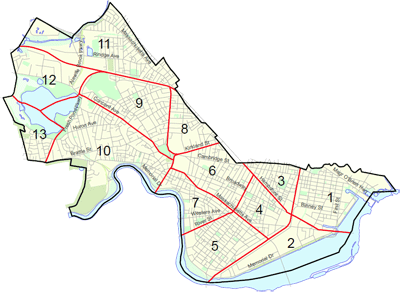 Aug 21, 2015 – Today, Cambridge Officials announced that an interdisciplinary team led by Utile Architecture + Planning (Utile) has been selected for the Cambridge citywide planning project. “The City is looking forward to embarking on this important citywide process with Utile,” said Richard C. Rossi, City Manager. “This multiyear effort is a major investment that the City is making in the future of our community. Residents, business employers and employees, property owners and developers, institutions, non-profit organizations, and many other stakeholders will be active participants in this process and a key component to ensuring that the citywide plan reflects the values of our community. I want to thank the other highly qualified and respected firms that participated in our selection process.”
 There are some substantial reports from the City Manager and some interesting Council Orders on this week’s agenda.
 Here are a few items that might prove interesting:
