April 1 Cambridge News
Somerville Invades Cambridge!
 The trouble has been brewing ever since the breakup of Middlesex County. Militia Commander Joseph Curtatone mustered Somerville’s Democratic Socialist forces on Prospect Hill and led the convoy south into the former Peoples Republic of Cambridge. Somerville Dictator Katjana Ballantyne ordered troops to mass on the East Cambridge border in what most people believed to be just a routine training exercise. However, when Militia Commander (and former Mayor) Joseph Curtatone arrived, things changed quickly. Some East Cambridge residents initially welcomed the visitors from the north – barely noticing the stylized “S” emblazoned on their drab uniforms. Jay Wasserman, in fact, invited some of the Somervillains in for drinks not knowing their true intentions.
The Somerville plan seems to be centered not on occupying all of Cambridge, but simply on capturing the revenue-producing Kendall Square area. This, however, requires establishing a “land bridge” through most of the East Cambridge neighborhood. When Rep. Michael Connolly (DSA, Cambridge-Somerville) was asked about the invasion and occupation, he remarked, “I was part of the Occupy Movement before it was fashionable. Now that the majority of the Somerville City Council are avowed socialists, it only seems natural that we should bring at least some portion of Cambridge into the fold – even if some level of military force is required to enforce our political philosophy.”
Outgoing City Manager and newly appointed General Louis DePasquale vowed to defend Cambridge’s historical boundaries. “We shall defend our island, whatever the cost may be. We shall fight on the beaches, we shall fight on the landing-grounds, we shall fight in the fields and in the streets, we shall fight in the hills. We shall never surrender!”

The original 2017 plan (above) has since been updated to eliminate all privately owned motor vehicles
Updated plans unveiled eliminates car lanes and adds segregated lanes on major Cambridge thoroughfares
City has long-term plan to install “protected lanes” for bikes, mopeds, pedestrians, seniors, and hoverboards.
After several additional minutes of research, City transportation planners and the newly reappointed Vision Zero and Motor Vehicle Elimination Advisory Committee released updates to the original 2017 plans for fully segregated lanes on several major Cambridge thoroughfares. “This has always been about the greater good – regardless who disagrees, petitions, or otherwise tries to convince us with data,” said City Manager Louis DePasquale. “We will now commit to preserving the tree canopy in accordance with the Tree Protection Ordinance, but this will necessitate the banning of all motor vehicles along the city’s major thoroughfares even though eminent-domain land-takings will enable us to create sufficient (100 ft) road width.”
The only city councillors to raise issues about the plan were Paul Toner and Denise Simmons who seemed to not understand how absolutely essential the elimination of the lanes for motor vehicles was in order to achieve a vanishingly small impact on climate change. City Arborist David Lefcourt was pleased that the tree canopy would be preserved in order to provide shade for the cycle track, the child track, the senior track, and the hoverboard tracks.
One member of Cambridge’s Bicycle Committee reiterated what she said 5 years ago: “The whole concept of ‘sharing’ is an outdated vestige of the pre-millennial age.” A new Gen-Z appointee to the Bicycle Committee added, “For sure. This is like necessary.”
Vision Zero Policy Reauthorized by Cambridge City Council
Original 2017 goal to eliminate all motor vehicles extended from 2020 to 2023
The Cambridge City Council’s 2017 “Vision Zero” policy has proven more difficult to achieve than originally thought. Originally conceived as a plan to reduce traffic-related injuries and fatalities through better road design, the ever-so-progressive Cambridge City Council decided in 2017 to ban motor vehicles outright, but received pushback from a coalition of soccer moms, grocery shoppers, and other climate change deniers. As a result, the absolute prohibition previously scheduled for March 2020 has been extended to March 2023.
Original April 2017 Report
There are, to be sure, some transitions that must take place before Cambridge can become truly a Vision Zero city and an example to other cities wanting to battle climate change in the worst way. Perhaps the greatest challenges are in rubbish/recycling collection and emergency services like police and fire protection, but these challenges also provide opportunities for local entrepreneurs.
Cambridge Health Alliance CEO Patrick Wardell announced that CHA is already well on its way toward Vision Zero. They have begun training and recruitment for very athletic persons to operate their new fleet of human-powered pedambulances.
It won’t be an all-bicycle future of course. To handle some of the heavier tasks, we’ll be seeing a lot more horses in the streets of Cambridge.
 New Fire Apparatus |
The Cambridge Fire Department embraced the initiative. "In addition to the environmental and nostalgia benefits, maintaining the horses will create jobs," said Fire Chief Gerald Reardon. "We have to think of the future even as we embrace the past."
Several new condo developments along New Street and elsewhere to be converted to stables. "We feel that horse-drawn vehicles are a sustainable solution to all delivery needs." Danehy Park will be converted to hayfields.
“The road apples left by horses will be an essential part of the citywide composting program,” said DPW Commissioner Owen O’Riordan.
Meanwhile, the City’s Department of Traffic, Parking, and Transportation has been drafting new specifications for “cycle tracks” to require a minimal 10 foot width. “Our plan all along has been to eventually execute a complete mode shift. At some point motor vehicles will be moved to the cycle tracks while cyclists take over the roadways. This should provide ample accommodation for motor vehicles during the interim years before the banning of all motor vehicles within city limits,” said Traffic Director Joseph Barr.
Flush with ARPA funds and after several years delay, MBTA ready to move forward with Green Line Extension to Porter Square
 The City’s Transit Advisory Committee, working in concert with the MBTA and the Cambridge Historical Commission, have announced updated plans for new kinda-rapid transit service to Porter Square with the option of extending service further west to Alewife and Belmont Center in the future. On the drawing board for more than a century, the Meigs Elevated Railway will add desperately needed capacity to supplement the new Green Line Extension to Union Square. MBTA analysts decided that it was just too difficult to safely move that many people underground and concluded that the time-tested concept of elevated railway service is an old idea that’s about to become new again.
Historical Commission Executive Director Charles Sullivan again conceded, “The Rindge gifts have had their day in the sun. While we remain grateful for the remarkable gifts from Frederick Hastings Rindge to the City of Cambridge, including City Hall, it’s time to make way for grander visions.” Sullivan added, “Sometimes history is simply overrated.”
East Cambridge Traffic Pattern Changes Begin Friday, April 1
Due to recent sewer projects and new lab development, the Cambridge Traffic Department announced several changes in the direction of one-way streets in East Cambridge (see map). “Based on community feedback and data collected over the last several months, we have decided that these changes are essential for public safety,” said Traffic Director Joseph Barr. Crews began posting “Do Not Enter” signs throughout the neighborhood on Thursday. Over the next week or so, City staff will continue to evaluate streets throughout the city to determine if similar changes are warranted. “We appreciate your continued patience and efforts as we manage these erratic changes,” said Barr. “Thankfully, recent rollouts of Quick-Build separated bicycle lanes have acclimated Cambridge residents to the introduction of new and bizarre traffic conditions.” For more information, please visit www.cambridgema.gov. Residents with questions about these traffic changes can contact Public Works at 617-349-4800 or the Traffic Department at 617-349-4700.

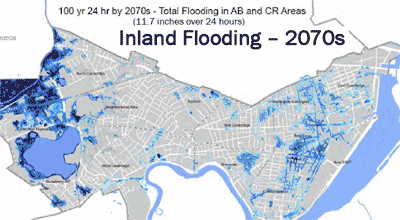 April 1 – After several years of research the City of Cambridge at long last has revealed its assessment of what may be in store in the decades to come – and it’s exciting!




 Some especially randy residents were so motivated to quickly fill in their Love-In Local game cards that they filled them up on the first day and came back for more game cards. City officials debated whether to print more cards or call off the campaign. Even Public Health officials were getting concerned.
 A group of residents living in and around Brattle Street have submitted a zoning petition to the City Council requesting that a "Luxury Overlay District" be created that encompasses Brattle Street between Mason Street and the Cambridge/Watertown city line. In a letter accompanying the petition, the residents note that their lawns would be considered spacious parks in some neighborhoods and the only parking problems that they have is the expense of plowing long driveways. "It is time to give back to our City," the letter continues, "While some neighborhoods reject gentrification, we will take on that burden, and welcome billionaires with open arms."
 After a successful career in city management, former Cambridge City Manager Robert W. Healy recently announced plans to move from Lowell back to North Cambridge in order to seek a City Council seat. This is where his roots are and he expects to have a strong neighborhood base on which to build his campaign. "I think I may have the Danehy vote all locked up," said Healy. "Various other candidates have courted that constituency with some success over the last twenty years, but these are really my people." Healy plans to open his campaign headquarters at Norris St. and Mass. Ave.
 In a surprise move last week, the Cambridge Election Commission took a hint from President Obama and proposed that all Cambridge residents who are eligible to vote will henceforth be required to exercise their franchise at every election. "We just got sick and tired of low voter turnout," said Commissioner Ethridge King. "If people want to live here, drive on our streets, play on our playgrounds, and send their kids to our schools, then the least they can do is show up to vote." Penalties for failing to go to the polls may include loss of parking sticker or being required to run for public office.
 In response to the friction that happens ever two years as city councillors engage in horse trading over the question of who should be elected Mayor, the Government Operations Committee met last week and proposed a novel method sure to satisfy the concerns of even the most hardened opponents of the Plan E Charter. Councillor Toomey’s proposal calls for the arrangement of 8 chairs in the center of the Sullivan Chamber on Inauguration Day. Music will then be played at the direction of the City Clerk who will secretly signal that the music be stopped without warning. At that moment, councillors will seat themselves. Whoever fails to be seated will then be eliminated from mayoral contention. This will be followed by the removal of one more chair. The music will then play again as the remaining 8 councillors circle around the remaining 7 chairs. Once again, at the discretion of the City Clerk, the music will suddenly stop, councillors will make every effort to be seated and the one not seated will be removed from contention. This series of musical runoffs will continue until the last person seated is declared Mayor for the next two years.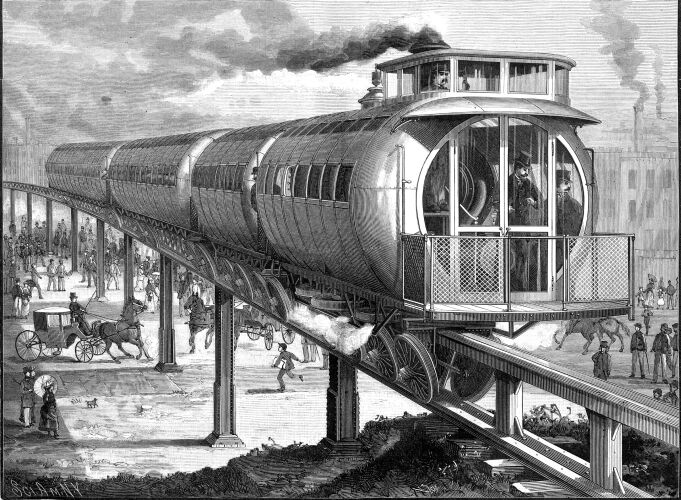
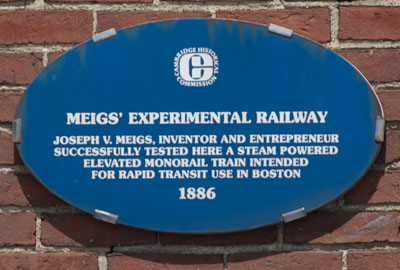 Cambridge stops are planned for Kendall Square, the new "Village in Lafayette Square", and the western end of Central Square where City Hall now stands.
 When news broke a few months ago about plans to host the 2024 Olympics in Boston and neighboring cities, Cambridge city councillors were none too pleased about not being consulted or involved in any way in the Olympic bid. They even passed a resolution opposing the Boston bid. Concerns were raised about the financial risks associated with the Olympic Games, the impact on housing and transportation, and especially on the ability of Cambridge residents to access their second homes on the Cape and elsewhere.
 Rossi cries foul. Will challenge Healy to settle matter via baseball contest.
 "We must have been on drugs," said industry representative Viagra Q. Zantax.
 MIT/Kendall Petition amended to add gambing as allowed use in PUD-5 district.
 A Cambridge resident has filed suit in Massachusetts Superior Court seeking an emergency injunction to end meetings that the Cambridge City Council has dubbed "roundtable" meetings. According to the Council, roundtable meetings allow a more relaxed give-and-take. While these meetings are public, neither public comment nor television broadcasts are possible. Tom Stohlman, a previous candidate for the Council who has tangled with them over interpretations of the Open Meeting law, said that he was seeking injunctive relief because the Council had gone too far. "The Council has the right to make its own rules, but it doesn’t have the right to make new meanings for old words," Stohlman said. "There’s nothing round about these roundtable meetings.
 In response to overwhelming pressure from the MIT and East Cambridge communities, MIT officials today announced their intention to include miniature golf as an allowed use in the proposed PUD-5 District. "It’s an essential part of the innovation ecosystem for this area," said Steve Marsh, Managing Director of Real Estate, MIT Investment Management Corporation – MITIMCo. "We realize this is only a start. We are now working with MIT’s Mechanical Engineering faculty to develop what will likely be one of the greatest rollercoasters ever conceived. We had plans to build a Go-Kart track, but City officials informed us that this would violate the City’s Vehicle Trip Reduction Ordinance." When informed that the Go-Kart Rally might require the zoning petition to be again re-filed, MIT Executive Vice President Israel Ruiz said, "No way we want to do that. We feel that miniature golf will fulfill the shared goals of MIT, the Kendall Square Association, and the City’s Planning Board. It’s entirely consistent with the recommendations of the K2C2 Committee."
 Cambridge Redevelopment Authority to Oversee Clearing of Buildings
 A legitimate question is, of course, how people will heat their homes in the absence of fossil fuels. While some have proposed solar panels heavily subsidized by the City’s unlimited wealth, Councillor vanBeuzekom had a more novel plan. "Rat power," she said. We can harness the rodent power of Cambridge by installing batteries of ‘hamster wheels’ in each home and put these rodents to work!" Speculators have already taken out permits to open new industrial pet food supply outlets to keep up with the expected demand for rodent chow. "Shares in the Ralston-Purina company soared in anticipation of the proposed ban.
 Future plans include folding the Licensing Commission into the Planning/BZA commission as well. The Recycling Advisory Committee will merge with the Police Review Advisory Board (PRAB). While current PRAB Director Brian Corr worried that the additional focus on recycling might delay investigation of police misconduct, Recycling Advisory Committee members expressed excitement at the fact that they will now have subpoena power. "There will no longer be the need to beg citizens to comply with recycling regulations," said long-time member Robert Winters. "We’ll now be able to just haul their asses before the Board."


