Cambridge Civic/Political Review 2016
Great Events:
May 7 – Moving Day at MIT celebrating the 100th Anniversary of MIT’s move from Boston across the river to Cambridge

Crossing the Charles |

Suffragist Katharine Dexter McCormick (who is a dead ringer
for our friend Martha Eddison) and MIT President Rafael Reif |
June 4 – Cambridge River Festival along Cambridge Parkway and Lechmere Canal.
Aug 25 – The 2016 Oldtime Baseball Game at St. Peter’s Field on Sherman St. in North Cambridge
Glory
March 12 – Under the guidance of Coach Lance Dottin, Cambridge defeated Lowell by a score of 54-38 to win the Division 1 North Championship.
March 14 – At the Boston Garden, the Falcons won over Catholic Memorial in the semifinals by a score of 77-73.
March 19 – In Springfield, Cambridge defeated St. John’s by a score of 66-51 to win the Division 1 State Championship.

 Retirements and Appointments (just a few significant ones of many):
Susan Flannery retired as Director of the Cambridge Public Library. She was succeeded by Maria Taesil Hudson McCauley.
Police Commissioner Robert Haas retired and Police Superintendent Christopher J. Burke was appointed as Acting Police Commissioner, effective May 8, 2016.
Retirement of Terry Dumas, Director of the Planning and Development Department for over 25 years and as a staff member for a total of 33 years at the Cambridge Housing Authority.
On July 1, CPS welcomed Dr. Kenneth Salim as the new Superintendent of Schools succeeding Jeffrey Young.
Appointments by the City Council:
Mar 11 – Announcement by Richard Rossi that he would not seek a contract extension as City Manager.
Sept 12 – Reappointment of James Monagle as City Auditor.
Sept 12 – Reappointment of Donna P. Lopez as City Clerk.
Sept 29 – Appointment of Louis DePasquale as City Manager.
Nov 14 – Oath of Office for Louis DePasquale as Cambridge City Manager
The City Clerks and City Managers of Cambridge
Deaths (only a few of the significant passings this year):
Feb 18 – Death of Marci Mitler in Porter Square
Feb 28 – Death of Dorothy Steele on Columbia Street
Mar 28 – Death of Election Commissioner Peter Sheinfeld.
April 14 – Death of Suzanne Schell Pearce.
June 23 – Death of cyclist Amanda Phillips in Inman Square
June 25 – Murder of Anthony Clay on Harvard Street
Oct 5 – Death of Lexington cyclist Bernard "Joe" Lavins in Porter Square
In the wider world, let’s take special note of the passing of musicians David Bowie (Jan 10), Glenn Frey (Jan 17), Paul Kantner (Jan 28), Keith Emerson (Mar 11), Prince (Apr 21), Leonard Cohen (Nov 10), Leon Russell (Nov 13), and Greg Lake (Dec 7).
 Politics and Elections:
Inauguration of City Council and School Committee
One new city councillor: Jan Devereux
Election of the Mayor (Denise Simmons) and Vice Mayor (Marc McGovern)
Two new School Committee members: Manikka Bowman and Emily Dexter
Election of School Committee Vice Chair (Fred Fantini)
March 1 Presidential Primary (Super Tuesday)
September State Primary: Connolly defeats Toomey; Jehlen defeats Cheung
November 8 – Election of "He Who Shall Not Be Named" as President
Initiative Petition on Lifting of Cap on Charter School Defeated
Initiative Petition on Legalizing Recreational Marijuana Narrowly Wins
David Maher selected as next President & CEO of Cambridge Chamber of Commerce
• Maher will not seek re-election to City Council
Day-to-Day Stuff and Around Town:
The Plastic Bag Ban went into effect on March 31.
Sept 19 – DPW Commissioner Owen O’Riordan reported on issues relating to the implementation of the Polystyrene Ordinance.
October – Harvard dining hall workers strike over wages, benefits (Cambridge Chronicle, by Amy Saltzman)
Cambridge and much of eastern Massachusetts suffered a severe drought that required Cambridge to purchase water from the MBTA so that the Cambridge reservoirs would not fall below critical levels. [October 31 Committee Report].
 Dec 14 – Participatory Budgeting Results Announced
[Total Budget $706,000]
Solar Power Shines! ($260,000)
Safer Crosswalks for Busy Roads ($104,000)
Solar-Powered Real-Time Bus Tracker Displays ($150,000)
Kinetic Energy Tiles ($50,000)
Hydration Stations in Four Locations! ($37,000)
Upgrade the Moore Youth Center ($80,000)
Cambridge Street Art Trail ($25,000)
Many Election-Related Proposals:
Mar 21 – City Council Order seeking to allow Cambridge to institute municipal lobbying regulations. [Never went anywhere]
Mar 21 – City Council Order to hold hearings on the feasibility of facilitating the appointment of an “Non-Citizen Representative” to the City Council. [Never went anywhere]
May 2 – City Council Order seeking to publish a Cambridge voter guide to be distributed to each household in Cambridge a month before the 2017 municipal election.
June 13 – City Council Order asking that Cambridge operate at least 5 early polling locations, for the entire day, for the entirety of the 11-day early voting period.
Turnout figures for Early Voting (complete)
| Early Voting Location |
Oct 24 |
Oct 25 |
Oct 26 |
Oct 27 |
Oct 28 |
Oct 29 |
Oct 31 |
Nov 1 |
Nov 2 |
Nov 3 |
Nov 4 |
Total |
| Main Library (449 Broadway) |
619 |
396 |
465 |
262 |
289 |
688 |
483 |
376 |
624 |
436 |
848 |
5486 |
| Election Commission (51 Inman St.) |
576 |
399 |
465 |
304 |
304 |
401 |
532 |
399 |
571 |
455 |
564 |
4970 |
| O’Neill Library (Rindge Ave.) |
387 |
208 |
302 |
171 |
207 |
373 |
273 |
216 |
395 |
279 |
478 |
3289 |
| Water Department (at Fresh Pond) |
368 |
207 |
218 |
131 |
157 |
429 |
233 |
216 |
348 |
254 |
474 |
3035 |
| Police Department (East Cambridge) |
290 |
186 |
225 |
93 |
104 |
263 |
251 |
205 |
349 |
260 |
508 |
2734 |
| All Locations |
2240 |
1396 |
1675 |
961 |
1061 |
2154 |
1772 |
1412 |
2287 |
1684 |
2872 |
19514 |
June 13 – City Council Order asking to explore voter reward options for municipal elections.
June 20 – City Council Order to hold hearings of the Neighborhood & Long Term Planning, Public Facilities, Arts & Celebration, and the Government Operations committee to discuss different models for campaign finance reform and publicly-funded municipal elections in Cambridge.
Nov 7 – City Council Order asking opinion of City Solicitor on the possibility of allowing non-citizen Cambridge residents to vote in municipal elections without a home-rule petition. [This Order was subsequently amended to actually send such a Home Rule Petition to the State Legislature without holding any hearings or debate on the proposal.]
Civics and Government:
Envision Cambridge continues: Workshops, Outreach, Appointment of Advisory Committees, Committee Meetings, Updates
Charter School Roundtable and Ballot Question [Divide widens on Question 2 in Cambridge (Cambridge Chronicle, by Natalie Handy)]
Traffic/Transportation:
Mar 21 – The City Council adopted the Complete Streets Policy and Council Order.
Mar 21 – The City Council adopted a Policy Order committing Vision Zero, a set of goals of eliminating transportation fatalities and serious injuries.
Apr 25 – City Council Order requested information on the feasibility of waiving the motor vehicle excise tax for electric vehicles.
Apr 25 – City Council Order asking if any progress has been made on the willingness of the City of Cambridge (and local developers) to contribute to a successful Green Line Extension.
May 9 – City Manager Richard Rossi communicates to City Council that City intends to commit $25 million toward successful completion of the Green Line Extension (GLX) Project. Somerville will commit $50 million and Medford will also commit funds.
May 31 – Waverly Path Project Opening Celebration
June 9 – Grand Opening of the first phase (Main Street to Broadway along Galileo Galilei Way) of the Grand Junction Pathway.
June 20 – Communication from Richard C. Rossi regarding the acquisition of two parcels of the Watertown Branch railroad from B&M Corporation for the purpose of creating a future multi-use path and greenway.
 June 22 – City presentation of possible reconfigurations for Inman Square roadways
June 27 – City Council Order regarding feasibility of the City of Cambridge filing its own home rule petition to reduce local speed limits (as Boston was then also seeking to do).
Sept 12 – City Council Order prematurely call for declaring all residential zones in Cambridge to be “Safety Zones” with 20mph speed limits and all office and business zones reduced to 25mph. [Council adopted state’s enabling legislation two months later and set citywide 25mph speed limit.]
Sept 12 – City Council Order asking City Solicitor and other relevant City departments to report back to the City Council on next steps on how to go about lowering our speed limits as well as the timeline for these actions.
Sept 12 – City Council Order seeking to increase the parking permit fee and consider other changes to towards reducing vehicle miles traveled and promoting alternative forms of transportation.
Sept 26 – City Manager Richard Rossi conveys City’s Agreement with MassDOT and MBTA regarding funding contribution agreement for Green Line Extension Project.
Oct 17 – City Council Order seeking to form a Vision Zero Working Group comprised of staff from the relevant City departments and residents to collaboratively develop and review traffic safety plans, street designs, public education initiatives, traffic enforcement and related policies with the shared goal of eliminating crashes that result in serious injuries and deaths as quickly as possible.
Oct 17 – City Council Order seeking to restrict the routes of travel and delivery hours of oversized trucks on City streets.
Nov 7 – City Council adopts Chapter 218 of the Acts of 2016, “An Act Modernizing Municipal Finance and Government”, Sections 193 and 194 giving municipalities the authority to reduce speed limits on all ways other than state highways.
Dec 8 – Speed Limit on City-Owned Streets Reduced to 25mph
City of Cambridge implements component of Vision Zero Initiative
Bicycle Specific Blitz of No-Process Orders:
Sept 12 – City Council Order asking for hearing of Transportation and Public Utilities Committee to discuss how City staff review use of bike infrastructure to determine what works, what does not work and what could be improved and to specifically discuss the possibility of making the Western Avenue cycle track a two-direction bike facility.
Oct 17 – City Council Order seeking information from Community Development Department and the Cambridge Police Commissioner on specific recommendations and measures the City should consider in order to prevent future bicycle accidents and fatalities from occurring, and to make our streets safer for bicyclists, motorists, and pedestrians.
Oct 17 – City Council Order calling for pilot system of flex-post separated bike lanes and intersections, along Massachusetts Avenue, Hampshire Street, and Cambridge Street.
Oct 17 – City Council Order to schedule hearing of Neighborhood and Long Term Planning, Public Facilities, Arts and Celebrations Committee to discuss the possibility of adding a bike-bus lane to Pearl Street and any measures that can be taken to accommodate on-street parking preferences of residents.
Oct 17 – City Council Order asking to include separated bicycle facilities or adjacent off-street paths in any plans for reconstructing all or part of Massachusetts Avenue.
Oct 17 – City Council Order seeking a pilot program of segregated bike lanes on Massachusetts Avenue between Cedar Street and Harvard Square; on Cambridge Street between Inman Square and Quincy Street; and on Broadway between Prospect Street and Quincy Street.
Oct 17 – City Council Order asking for segregated bike lanes on both sides of Huron Avenue for the full length of its reconstruction.
Nov 7 – City Council Order seeking a deadline of Nov 1, 2017 for fully implementing the various street improvements and safety measures for increasing bicycle safety that were passed during the Oct 17, 2016 meeting.
Housing/Zoning:
Jan 11 – Ordination of Barrett Petition to modify zoning relating to Accessory Apartments and Basement Space
Apr 11 – Inclusionary Housing Study followed by many hearings of the City Council’s Housing Committee
[Aug 11 Committee Reports: Report #1, Report #11, Report #12]
The proposals are now before the Ordinance Committee with action expected in early 2017.
Multiple Medical Marijuana Dispensaries filed zoning petitions for favorable sites.
The City Council is currently attempting to address this by alter the allowed uses in certain business zones.
Aug 1 – City Council Order seeking update on the status of the Classification of Commercial Land Use and Recommendations Study.
Sept 12 – The Classification of Commercial Land Use and Recommendations study is reported to the City Council
This may play a significant role in 2017 if the City Council chooses (as is expected) to update the "Table of Uses" for the various business zones in the city.
The series of marijuana dispensary zoning matters plus the recent initiative petition regarding recreation marijuana and potential retail stores may necessitate this discussion.
Harvard Square:
Aug 1 – Committee Report of the Neighborhood and Long Term Planning, Public Facilities, Arts and Celebration Committee on topic of possible formation of a special working group tasked with developing a framework for the continued stewardship, curatorship and oversight of the Out of Town News Kiosk in Harvard Square.
Sept 12 – City Council Order asking Historical Commission to produce a new status report that reviews the Harvard Square Conservation District’s effectiveness since 2005, and that considers whether new zoning regulations may be necessary to fulfill the community’s goals.
Oct 17 – Committee Report of the Neighborhood and Long Term Planning, Public Facilities, Arts and Celebration Committee on the redesign of the Out of Town News Kiosk.
The year ended with significant activism regarding the future of Harvard Square and specifically the plans for the Abbot Building (Curious George) and neighboring buildings recently purchased with plans for significant alterations. The status of some major vacant spaces, esp. the Harvard Square Cinema, have also been central to this discussion.
Central Square:
Dec 19 – Ordinance Committee Report on zoning petition submitted by Nabil Sater, et al to amend the Zoning Ordinances in the Central Square Overlay District, Section 20.300 (a.k.a. – the Central Square Restoration Petition). This petition received unanimous approval by the Planning Board at its initial hearing.
Kendall Square and Nearby:
Sept 12 – Notification from City Manager of approval of the Kendall Square Foundry Development Partners as the development entity for the Foundry.
This was followed by irate reaction from at least one city councillor. [Councilor calls Foundry process egregious; city manager says project not finalized (Cambridge Chronicle, by Adam Sennott)]
The latest word is that the entire process is being restarted.
Volpe Working Group Formed
Oct 3 – As part of the City’s continuing effort to plan for the future redevelopment of the Volpe National Transportation Research Center site in Kendall Square, the City Manager has appointed a "Volpe Working Group" consisting of residents of the surrounding neighborhoods – East Cambridge, the Port, and Wellington-Harrington – along with representatives of the Kendall Square business community and other community stakeholders.
Nov 15 – MIT tapped to redevelop Volpe Center in Cambridge (Boston Globe)
 Wellington/Harrington Neighborhood:
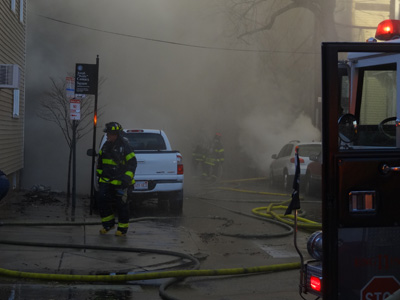
Dec 3 – The Berkshire Street Fire
The Dec 3, 2016 fire in the Harrington/Wellington/East Cambridge neighborhoods caused significant damage to six buildings, and fire or water damage to at least five others.
Initial estimates were that there were 48 displaced families, representing 104 individuals, registered with the Red Cross of Massachusetts.
The public can donate to the Mayor’s Fire Relief Fund online at www.cambridgema.gov/firefund or by sending a check to:
Mayor’s Fire Relief Fund
Cambridge City Hall
795 Massachusetts Avenue
Cambridge, MA 02139
By all accounts, the City, many relief agencies, and a tremendous number of individuals really stepped up to the plate to assist others in the wake of this catastrophic event.
Other City Council Initiatives:
Minimum Wage:
June 13 – City Council Order asking that the Mayor convene a Task Force charged with establishing recommendations for the City Council on what the ideal minimum wage in Cambridge should be, and how to best implement this increase without creating unintended consequences in Cambridge or elsewhere.
Outdoor Lighting:
There were various hearings and other meetings on the recommendations from the Outdoor Lighting Task Force (and related proposals for zoning changes) that address the potential detrimental impact of outdoor lighting and propose solutions that diminish existing problems and address problems that may be created by new development. [Report][Proposed Ordinance]. The Task Force was appointed Dec 2, 2013 and was originally expected to complete its report and draft Ordinance by Spring 2014. It took a lot longer than that with many different iterations of the proposed Ordinance.
Short-Term Rentals:
June 20 – City Council Order calling for a joint hearing of the Public Safety and Housing Committees for the purpose of gathering testimony from stakeholders in the City regarding the impact of short-term rentals on our communities with a view in mind to draft an ordinance that meets the goals outlined above, and to refer that proposed ordinance to the Ordinance Committee at the appropriate time.
Councillor Kelley’s June 20 Communication on "Short-Term Rentals in Cambridge: An Overview of Current Usage and Patterns as well as Policy Recommendations".
Aug 1 – Committee Report of Public Safety Committee and Housing Committee on the presence and impact of short-term rental units (Airbnb, FlipKey, VRBO, etc.) in Cambridge.
Broadband Task Force:
Sept 26 – Broadband Task Force recommendations and Tilson Report.
One estimate is that it would cost $187 million dollars to build such a network with no guarantee that customers would leave Comcast or another Internet service provider in favor of such a new network.
Nov 17 – Joint Statement of Cambridge Mayor E. Denise Simmons and City Manager Louis A. DePasquale Regarding Cambridge as a Sanctuary City
Eminent Domain:
June 13 – City Manager’s recommendation that the City Council approve an Order to take the property at 859 Massachusetts Avenue by eminent domain at a cost of $1,363,875. (This would be a friendly taking from the Cambridge Chamber of Commerce.)
June 20 – City Council approves this taking and related expenditure. City Manager Richard Rossi explained at the meeting that the facilities study as well as the $5 million renovation cost will cover three buildings – the newly acquired 859 Mass. Ave. building as well as 831 Mass. Ave. (the Lombardi Building) and 3 Bigelow St. (currently used for transitional housing). It is anticipated that 859 Mass. Ave. will be used for housing and 3 Bigelow St. will be converted to municipal uses and possibly joined to an expanded 831 Mass. Ave.
Sept 26 – After multiple City Council Orders calling for the City to take the long-derelict Vail Court property on Bishop Allen Drive, the City Manager brought in a recommendation and plan to take Vail Court by eminent domain. This was approved by the City Council, and the cost is now being challenged by the previous property owners.
Now, on to 2017 – a municipal election year!
 It’s a relatively short agenda to open the new year, but there are some notable items:
 I was born and raised in Massachusetts, and I moved to Cambridge with my husband in the summer of 2004 and we are proud to call Cambridge home. We have two children, a third and sixth grader, both of whom have been enrolled in the Cambridge Public School system since they were in Junior Kindergarten. In 2013 as an active participant in our school community and civic life as a Cambridge resident, I became aware that food insecurity was a barrier for academic success for many of our students. This realization was a call to action, and I became determined to ensure that my childrens’ classmates had their basic needs met and could capitalize on the incredible CPS curriculum at every grade level.
